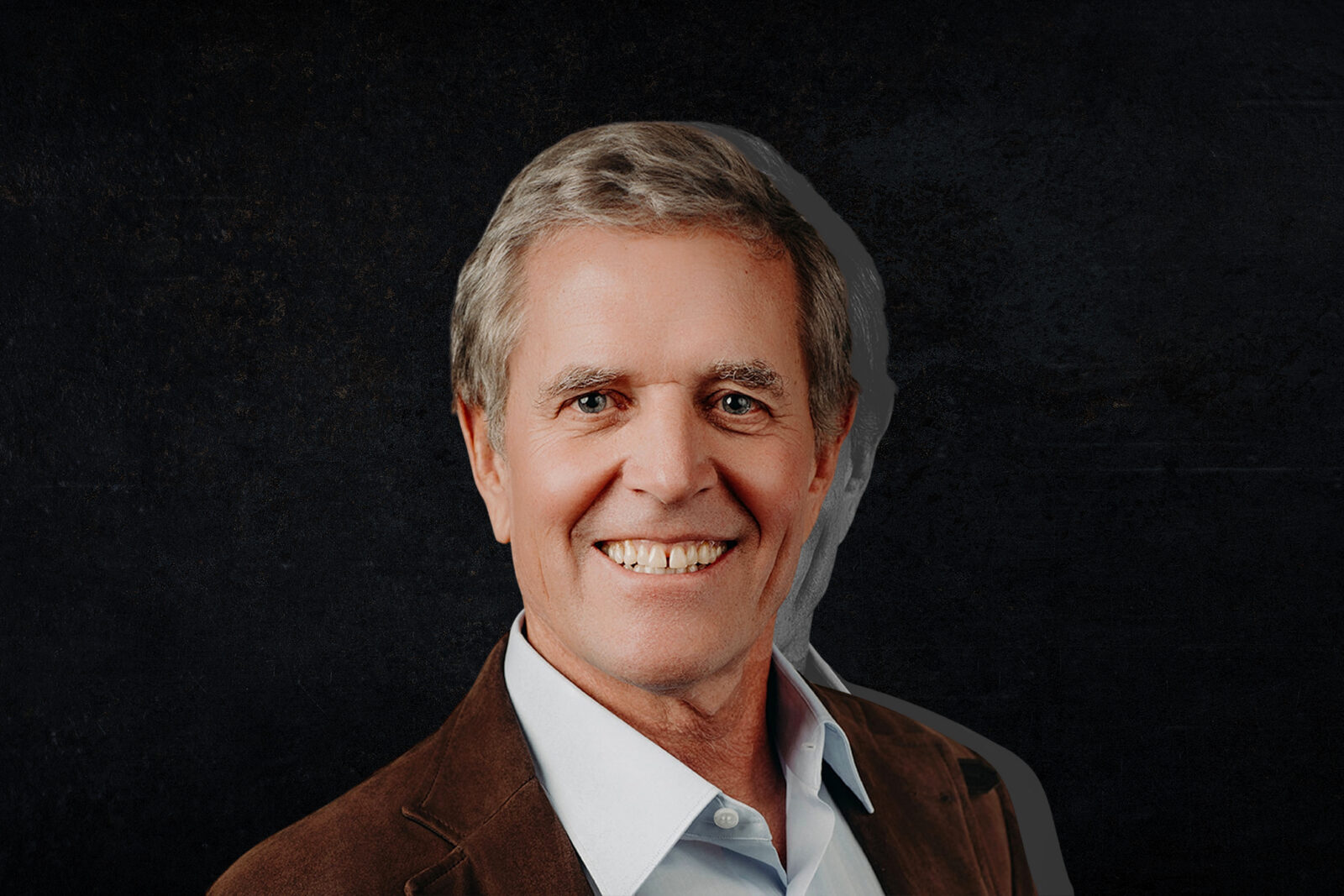

If you’re like me, your approach to nutrition mostly involves squinting at a label, not recognizing any of the ingredients, and eating the thing anyway. Peter Castleman decided that wasn’t good enough. After four decades as an investor, including as Chairman and Managing Partner of J.H. Whitney & Co., where he played a role in investments tied to The North Face, Igloo and Herbalife, Peter came out of retirement to become the founder and CEO of WISEcode, an AI-powered food transparency platform that has mapped more than 840,000 products. He’s 70 years old and says he’s never felt more excited about an idea, proving it’s never too late to chase a big idea.
Give us the elevator pitch. What is WISEcode?
Basically, we’re trying to solve what I call the food information crisis. We literally don’t know two things: what’s in our food and what it does to us. At WISEcode, we’ve been spending a dozen years or so solving that. We’ve created what we call the Food Genome Project, which is really mapping the entire food system. So we now know exactly what’s in our foods, and we can tell you what it does for you. And that applies to consumers, policymakers, government people, industries, retailers, scientists, everyone. That information didn’t exist, and now it does.
This isn’t the first company you’ve started or been a big part of. Why did you want to become a founder again?
Well, I’m 70, okay? When I turned 50, I retired from my firm. I’m healthy. I eat generally well. But when you turn 50, you enter the kill zone for chronic disease, and chronic disease is 90% of our health issues, and 80% of chronic disease is driven by what we choose to do. We actually control most of our health outcomes. So I basically wanted to simply hack what I’m going to eat. I didn’t want to get cognitive issues. I didn’t want to get any late-onset chronic disease. But that hack doesn’t exist. It shocked me. It just doesn’t exist. So this passion became the business purpose of WISEcode, and I said, “Okay, I’m gonna get this information. I’m going to do for me, I’m going to do for every single individual. I’m going to give them Food Truth.” Formally, I’ve probably been doing this for about 12, 13 years. Informally, I’ve been thinking about it for 20 years.
When a business is a personal passion, do you have a process for figuring out whether it will be a passion for other people, too? Or do you just follow your heart?
Like many people, I suffer from that latter part, which is letting your emotions get too far into stuff. I’ve always said, “Fall in love with your family and your friends, not your businesses.” It’s hard to do, because you develop passions. I have three tests I generally apply to any kind of activity. The first I call the North Star test: is it very clear that what you’re trying to do resonates with others? Is it going to be an aha moment or a so-what moment to the world? Number two, I call the sandbox test. How big is your sandbox? How big is your addressable market? And how crowded is your sandbox? And then the third one I call the moat test, which is: can you build defensible business assets that prevent people from copying what you do? People will copy you in a second if you’re successful. If I’m not slam-dunk strong on all three tests, I try to stay away. I apply that to WISEcode. I apply it to everything I do. I’m better at it now than I was at 25.
How do you figure out if other people are interested in your idea when you don’t have a big budget?
Social media and everything we have today are double-edged swords. But I use SurveyMonkey all the time. You can ask a question and, for not very much money, you can get 500, 1,000 really clear answers that help you evolve. You can do the same thing on social media tools. The tools out there today are so great. It used to be you’d have to hire McKinsey or Bain for a gazillion dollars, and they’d do a six-month study. Now, in a day, you can get better information than they ever gave you.
What do you say to someone in their 50s who thinks, “I always wanted to do my own thing, but it’s too late”?
First and foremost, I think you gotta be honest with yourself. Who are you? What do you love doing, and are you good at this? Late in your career, any time, if you don’t have the energy, the drive and the staying power, don’t do it. Because building companies is hard. You’re going to get knocked on your fanny a ton of times. You gotta get back up. You gotta inspire others around you. You gotta keep going when everyone says, “Don’t do it.” You’re gonna run out of money. You’re gonna have your spouse saying, “What the hell are you doing?” But if it’s in your DNA, it’s the greatest thing in the world. Most of my contemporaries are reducing their handicap on the golf course, and I’m spending 10 hours a day, seven days a week on WISEcode, and I love it. I wouldn’t change it for the world, but that’s me. The greatest joy I get, besides my love of my friends and family, is building businesses that actually make a difference, and if that’s in your DNA, do it. I think the only failure in life is not trying.
If you’re like me, your approach to nutrition mostly involves squinting at a label, not recognizing any of the ingredients, and eating the thing anyway. Peter Castleman decided that wasn’t good enough. After four decades as an investor, including as Chairman and Managing Partner of J.H. Whitney & Co., where he played a role in investments tied to The North Face, Igloo and Herbalife, Peter came out of retirement to become the founder and CEO of WISEcode, an AI-powered food transparency platform that has mapped more than 840,000 products. He’s 70 years old and says he’s never felt more excited about an idea, proving it’s never too late to chase a big idea.
Give us the elevator pitch. What is WISEcode?
Basically, we’re trying to solve what I call the food information crisis. We literally don’t know two things: what’s in our food and what it does to us. At WISEcode, we’ve been spending a dozen years or so solving that. We’ve created what we call the Food Genome Project, which is really mapping the entire food system. So we now know exactly what’s in our foods, and we can tell you what it does for you. And that applies to consumers, policymakers, government people, industries, retailers, scientists, everyone. That information didn’t exist, and now it does.
This isn’t the first company you’ve started or been a big part of. Why did you want to become a founder again?
Well, I’m 70, okay? When I turned 50, I retired from my firm. I’m healthy. I eat generally well. But when you turn 50, you enter the kill zone for chronic disease, and chronic disease is 90% of our health issues, and 80% of chronic disease is driven by what we choose to do. We actually control most of our health outcomes. So I basically wanted to simply hack what I’m going to eat. I didn’t want to get cognitive issues. I didn’t want to get any late-onset chronic disease. But that hack doesn’t exist. It shocked me. It just doesn’t exist. So this passion became the business purpose of WISEcode, and I said, “Okay, I’m gonna get this information. I’m going to do for me, I’m going to do for every single individual. I’m going to give them Food Truth.” Formally, I’ve probably been doing this for about 12, 13 years. Informally, I’ve been thinking about it for 20 years.