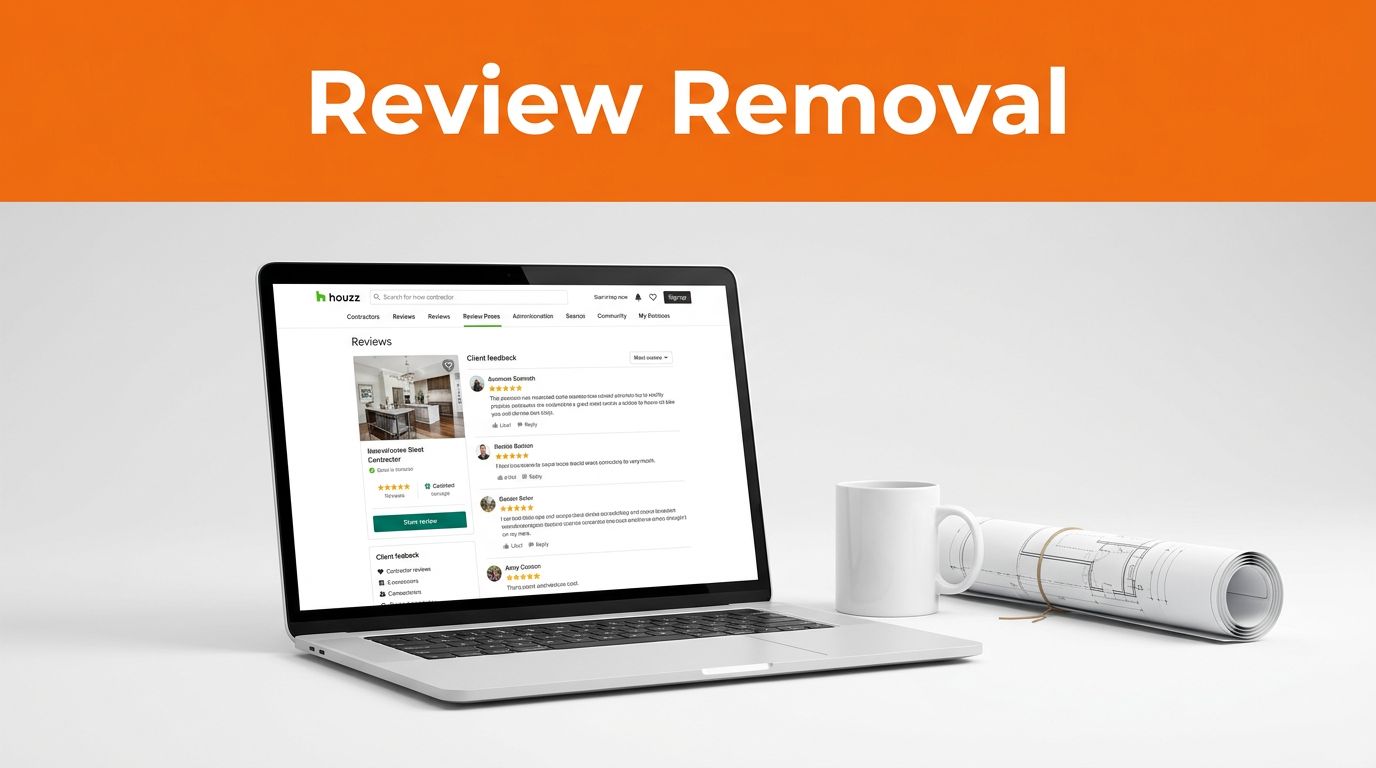

A bad Houzz review can hurt faster than a missed deadline. It sits where prospects compare you with the next contractor or designer.
Houzz review removal depends on policy, not frustration. If the review came from a real client and follows Houzz rules, it usually stays. If it is fake, mismatched, harassing, or duplicated, you have a stronger case.
The best response is simple: sort the review, document the facts, and answer in a way that helps the next prospect trust you.
What Houzz usually removes, and what it leaves alone
Houzz says it protects genuine reviews from past clients. Its negative review help page says Houzz does not remove reviews from real past clients that follow policy. The review policy also bans libelous, defamatory, threatening, harassing, abusive, discriminatory, pornographic, and obscene content.
That means the type of review matters more than the tone. A harsh opinion from a real customer is one thing. A fake post or a review about the wrong project is another.
| Review type | Likely Houzz response | Best next move |
|---|---|---|
| Fake or unknown client | Possible removal | Report it with proof of no client relationship |
| Duplicate review | Possible removal | Flag the duplicate and point to the original |
| Off-topic or wrong project | Possible removal | Show contract, address, or project records |
| Harassment or threats | Strong policy issue | Report it with screenshots and context |
| Opinion-based criticism | Usually stays | Reply calmly and ask for an offline discussion |
| Conflict-of-interest or self-review | Possible removal | Show why the poster is not a real client |
When a review fits the last row, removal is possible, but never guaranteed. When it is only a bad opinion, a clear response usually does more good than a long fight.
Build a clean case before you contact Houzz
Before you open a support ticket, build a file that makes the situation easy to understand. If Houzz asks for more detail, you want the answer ready.
Gather the basics first:
- The project name, address, and date range.
- A screenshot of the review and the reviewer profile.
- Your contract, proposal, invoice, or change order.
- Email or text threads that show the client relationship.
- Photos, permits, or punch-list notes if the review names the wrong job.
- Any signs of threats, extortion, or review swapping.
Keep the file short and organized. A clean folder beats a long story.
If the review describes a project you never handled, say that plainly. Then attach the records that prove the mismatch. If the complaint is real but messy, your documentation still helps you answer well.
How to report a Houzz review the right way
Report only what you can prove. That keeps the process focused and lowers the chance of a messy back-and-forth.
- Save the review, the profile name, and the page URL.
- Note the policy issue in plain language, such as fake client, duplicate review, off-topic project, harassment, or conflict of interest.
- Attach one or two documents that support your claim.
- Write a short note. Keep it factual, not emotional.
- If the reviewer is a real client who made a mistake, ask them to edit it in their Houzz account. Houzz says they can do that through Activity, Your Reviews, Read More, Edit Review, then Submit.
Houzz does not want review posts used as payment pressure. Its policy allows bona fide refund requests tied to a real customer problem, but using money to buy a better review can backfire.
Do not ask Houzz to delete a real review just because it hurts. Ask when the review is fake, duplicated, unrelated, harassing, or otherwise outside policy.
A useful report says what happened, why it breaks policy, and what proof supports that view. It does not try to win an argument.
What to say when the review is opinion-based but unfair
Sometimes the review stays because it came from a real client. That does not mean you should leave it alone. A calm public reply can reduce the damage.
Keep the reply short. Future clients are reading for tone, not drama.
Try a response like this:
Thanks for the feedback. We reviewed our records and can’t match this review to a completed project. Please contact our office so we can look into it.
If the client is real and upset, try this instead:
Thanks for sharing this. We’re sorry the project missed your expectations. We’d like to understand what fell short and see what we can fix.
Avoid sarcasm. Avoid private details. Avoid arguing line by line. A response should show future clients that you handle pressure without losing control.
When escalation makes sense
If the review is part of a pattern, the problem is bigger than Houzz. A fake review attack, repeated spam, or a false claim tied to extortion needs a broader plan.
That is where online reputation management matters. A reputation management company can help track the issue across search results, profiles, and review sites. Some online reputation management companies focus on review responses alone. Others also handle online reputation repair and search cleanup.
For businesses that need more than a single response, professional reputation management services can help organize the next steps. If you want a broader review of your profile and search results, trusted online reputation experts can help map that out.
The right partner may be a Reputation Repair Company, an Online Reputation Expert, or a team that offers Reputation Repair Services as part of a larger plan. The label matters less than the work. You want someone who can handle evidence, response strategy, and the rest of the public trail.
If the review contains threats, false claims that cross into defamation, or signs of extortion, get legal advice before you reply. Keep every message, ticket number, and screenshot.
Conclusion
Houzz review removal works best when you match the issue to the policy, document it cleanly, and stay calm. Real-client opinions usually stay, but fake, duplicate, off-topic, or harassing reviews give you a stronger path.
If Houzz removes the post, that is the cleanest outcome. If it stays, the next move is a sharp public reply and more recent reviews that show your real standard of work.
That mix of documentation, patience, and reputation management does more for contractors and designers than panic ever will.