
A negative social post can feel like graffiti on your storefront. You can’t always erase it, but you can stop it from defining your brand.
The bottom line: social media content suppression works best when it combines platform rules, fast communications, and steady publishing. The right provider depends on where the post lives (Instagram, TikTok, X, Reddit), how fast it’s spreading, and whether it breaks a policy or a law.
Below is how real providers suppress negative social media posts effectively, without sketchy tactics that can backfire.
What “suppression” means on social media (and what it doesn’t)
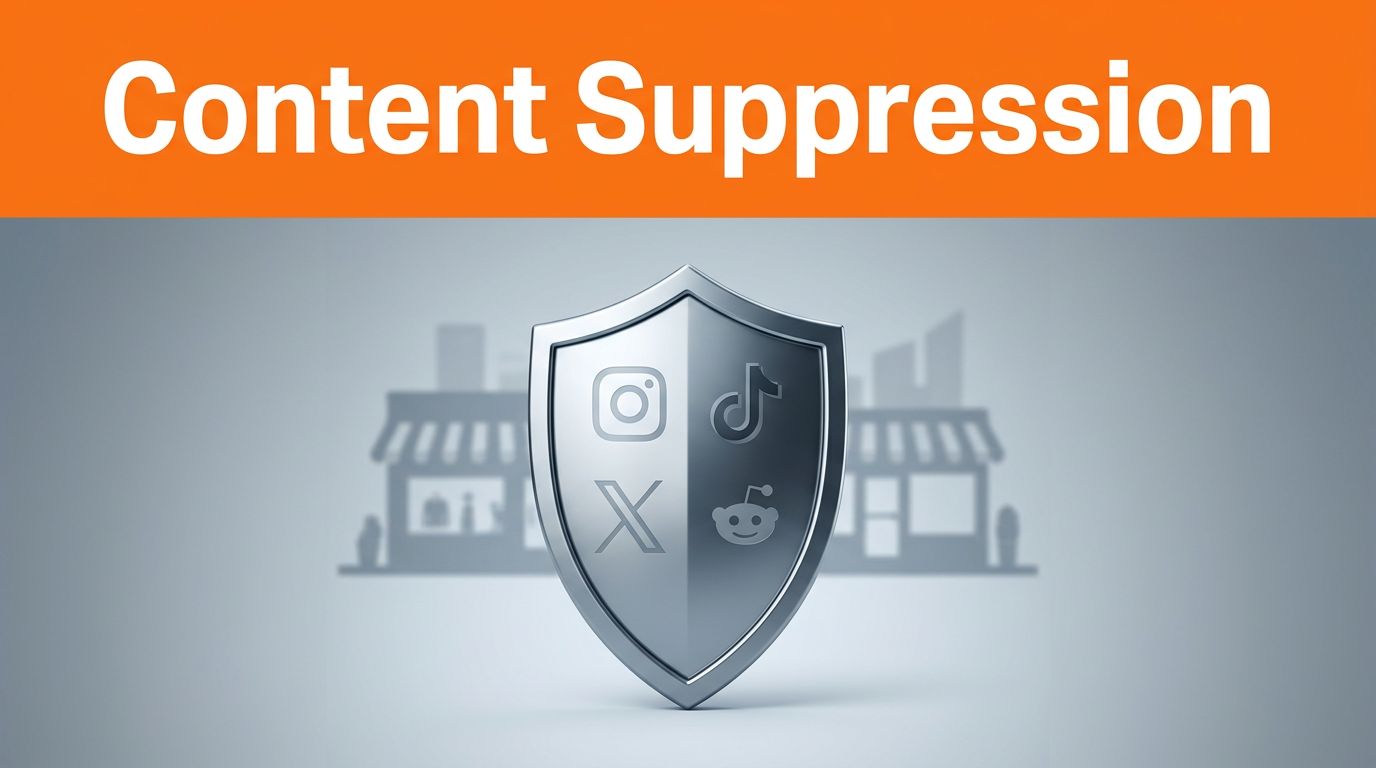
On social platforms, “suppression” usually isn’t deletion. In most cases, it means reducing reach and impact through compliant moves: reporting real violations, responding well, and out-publishing the controversy with stronger content.
As of March 2026, major platforms still focus enforcement on policy violations (harassment, threats, impersonation, scams, non-consensual imagery, and some forms of hate). Meanwhile, harsh opinions, complaints, and “I had a bad experience” posts often stay up.
So what can a provider do?
- Platform-side suppression: Improve your response strategy, coordinate reporting when rules are broken, and reduce ongoing engagement with the negative post.
- Audience-side suppression: Publish credible rebuttals, FAQs, receipts, and customer stories that give people a better “next click.”
- Search-side suppression: Push social drama lower in Google results when it starts ranking for your brand.
That last point matters because negative social posts often spread twice: once inside the app, then again on page one of Google.
If you need a clear buyer framework before you talk to vendors, start with this reputation management company guide. It helps you separate real process from vague promises.
A useful rule: if a vendor promises they can “remove any post,” you’re looking at risk, not expertise.
Provider categories that work for negative social posts
Not all online reputation management companies are built for social fire drills. Some are great at Google suppression, others are built for real-time comms. Here’s how to think about the main provider types.
A quick comparison helps you shortlist faster:
| Provider type | Best for | What they do well for social posts | Limits to know |
|---|---|---|---|
| ORM agencies | Ongoing reputation management | Monitoring, response playbooks, escalation, content strategy | Removal is limited unless a post violates rules |
| SEO and reputation firms | Search visibility and brand queries | Push negative posts down in Google, build positive assets | Slower impact inside the social app |
| PR firms | Narrative and press handling | Statements, outreach, stakeholder messaging, executive comms | May not manage day-to-day moderation |
| Crisis communications specialists | Viral incidents | Rapid response, message discipline, internal comms, Q&A prep | Often expensive, usually short engagements |
| Legal and takedown services | Defamation, impersonation, IP | Legal notices, platform legal channels, court orders when needed | Not a PR solution, can inflame attention |
| Social moderation tools and managed community teams | High comment volume | Queue management, tagging, after-hours coverage, routing | Tools don’t fix search results by themselves |
1) ORM agencies (best all-around for social media content suppression)
A strong ORM agency is often the best “center of gravity” because they can coordinate multiple lanes: community management, content, review response, and search visibility.
This is where terms like online reputation management, online reputation repair, and Reputation Repair Services become practical, not fluffy. A capable agency builds an operating system: what gets answered, what gets ignored, what gets escalated, and what gets documented.
When you evaluate an agency, ask if they run an integrated reputation management program or only publish content. If the negative post is already ranking in Google, you also need a suppression plan that targets search results.
For an example of how reputable firms structure repair work across channels, see a 2026 content removal and suppression roundup. Use lists like that for categories, then vet hard for ethics and execution.
If you want a clearer picture of what “repair” work includes when content can’t be removed, these online reputation repair services outline common, compliant approaches that focus on outcomes over gimmicks.
2) SEO and reputation firms (best when the post starts showing up on Google)
If a negative post is mainly hurting you because prospects search your brand, an SEO-led firm can be the fastest route to relief.
This is classic SERP suppression: publishing positive assets, strengthening owned profiles, earning coverage, and improving what ranks for your name. It’s still social media content suppression, but through the search layer instead of the feed.
It also helps with “suggested searches” and brand queries, because stronger content tends to attract more clicks and links over time.
For baseline market context on vendor types (full-service, hybrid, and tool-first), Built In’s overview of brand reputation management services is a helpful map.
3) PR and crisis comms (best when leadership is in the blast zone)
When a negative post becomes a story about your company’s character, PR and crisis comms teams shine.
They focus on message clarity and consistency. They also help you avoid the classic mistake of posting five different explanations across five platforms.
This category is also the right place to hire an Online Reputation Expert who can coach executives on short, safe statements and keep your team from arguing with trolls.
4) Legal and policy-based takedown providers (best for clear violations)
Legal support is effective when the content crosses a line: impersonation, doxxing, blackmail, copyright misuse, trademark issues, or demonstrably false statements that meet legal standards.
The key is restraint. Legal threats over normal criticism can make the post travel farther.
Case-study pages can show how some providers approach removal when it’s actually feasible, for example this Reddit thread removal case study. Treat any case study as a pattern, not a guarantee.
How to vet a provider (checklist, questions, and timelines)
A good provider won’t hide their process. They also won’t push you into ToS violations.
Practical checklist for suppressing negative social posts
- Triage in 24 hours: Capture links, screenshots, and timestamps, then map where it’s spreading.
- Policy review: Identify what violates platform rules (impersonation, harassment, threats) versus what’s protected opinion.
- Response plan: Decide who responds, where, and with what proof. Keep it short.
- Community operations: Moderate comments, route DMs, and create a single source of truth (FAQ or statement).
- Content replacement: Publish new content that answers the same customer fear the post triggers.
- Search suppression: If the post ranks on Google, build assets to outrank it over time.
- Monitoring and reporting: Track re-uploads, copycats, and keyword spikes.
If you need a simple operating rhythm for this work, this online reputation management playbook is a solid reference point for what to measure and how to respond fast.
Vendor questions that reveal competence
- What’s your process when a post doesn’t violate platform policy?
- Who writes the first draft response, and who approves it?
- What’s your escalation path for legal, PR, and customer support?
- How do you handle “Streisand effect” risk, meaning attention spikes after action?
- What assets will you build that we fully control (site pages, profiles, media)?
- What reporting do we get weekly, and what does success look like?
- Are you a Reputation Repair Company that executes, or mainly consulting?
If you want a structured plan you can adapt to your situation, use this online reputation repair guide. It pairs well with vendor screening because it forces clear milestones.
Realistic expectations for outcomes
Inside social apps, results can be fast if the issue is small. You might stabilize comments in days with the right moderation and messaging. Still, you usually can’t “bury” a post on-platform the way you can in search.
On Google, suppression often takes 4 to 12 weeks, depending on how authoritative the negative URL is and how strong your existing assets are.
Also, visibility controls change. X, for example, has continued to surface debates about reach and ranking signals, as covered in this reporting on X visibility controls. That’s why a provider should focus on what you can control, not secret tricks.
Conclusion
Effective social media content suppression comes from the right mix of communications, platform policy, and search strategy. ORM agencies help you run the full system, SEO-focused firms reduce Google exposure, PR and crisis teams control the narrative, and legal services help when real violations exist.
Choose a provider that explains their methods in plain language, sets honest timelines, and offers compliant online reputation management that won’t create a second crisis.