
Incorrect information in a Google Knowledge Panel can hurt public perception before anyone clicks your site, ruining your digital first impression. A bad photo, old job title, or wrong address becomes the first thing people see.
The good news is that most errors can be improved. To fix Google Knowledge Panel issues, usually follow three tracks: submit an edit, claim the panel if Google offers that option, and correct the public sources Google trusts.
Key Takeaways
- Google Knowledge Panels pull automatically from public web sources, so fixing errors starts with identifying and updating those trusted sources like official sites, Google Business Profile, and profiles.
- Use three main paths: claim the panel if available for verification priority, submit factual edits via the pencil icon or Suggest an edit with clear proof, and correct source data for lasting changes.
- Submit edits by specifying the exact wrong field, providing a short factual correction backed by public evidence like an official bio—avoid promotional language.
- If panels don’t update, prioritize controlled pages with schema markup, NAP consistency, and profile cleanups, then tackle third-party sources; source accuracy trumps the edit form.
- For complex issues like rebrands or entity confusion, pair fixes with reputation management to ensure consistent facts across the web and give Google time to recrawl.
Start by finding where the bad information comes from
Google says in its Knowledge Panel Help that the google knowledge panel is generated automatically from public information on the web. The google knowledge panel is a visual representation of the knowledge graph, Google’s vast knowledge graph of interconnected entities and relationships. Google’s support docs also say it doesn’t manually create or delete Knowledge Panels, because it wants to protect the integrity of search results.
That matters because different panels pull from different places. A local business panel often reflects Google Business Profile and Maps data. A person panel may pull from an official bio page, major publisher pages, social profiles, or knowledge databases. A brand panel may mix website, news, logo, and entity data.
Common knowledge panel errors include old headshots, a former employer, wrong social links, outdated logos, closed locations, and mixed-up entities with the same name despite Google’s entity recognition.
If you’re working on a rebrand, merger, or executive profile change, don’t treat the panel as a stand-alone problem. It’s often a symptom of messy source data. That’s why many teams pair panel fixes with broader online reputation management for businesses when the issue affects ai search visibility, local trust, or branded queries.
Claiming a panel, suggesting an edit, and fixing sources are different jobs
Google gives you a few paths, but they don’t do the same thing.
| Method | What it does | Main limit |
|---|---|---|
| Claim the panel | Verifies your relationship to the entity | Not every panel can be claimed |
| Suggest an edit | Reports a wrong fact directly in Search | Google still decides whether to change it |
| Fix source accuracy | Updates the pages and profiles Google reads | Takes longer, but lasts longer |
Google’s guidance on feedback for content about you says anyone can submit feedback on a search feature. However, if you’re an official representative who completes the verification process and the panel is about you, Google may prioritize that feedback. That’s the real value of claiming a panel. It can speed review and open more edit options, but it doesn’t give full control.
Claiming a panel helps, but it doesn’t let you write the panel yourself.
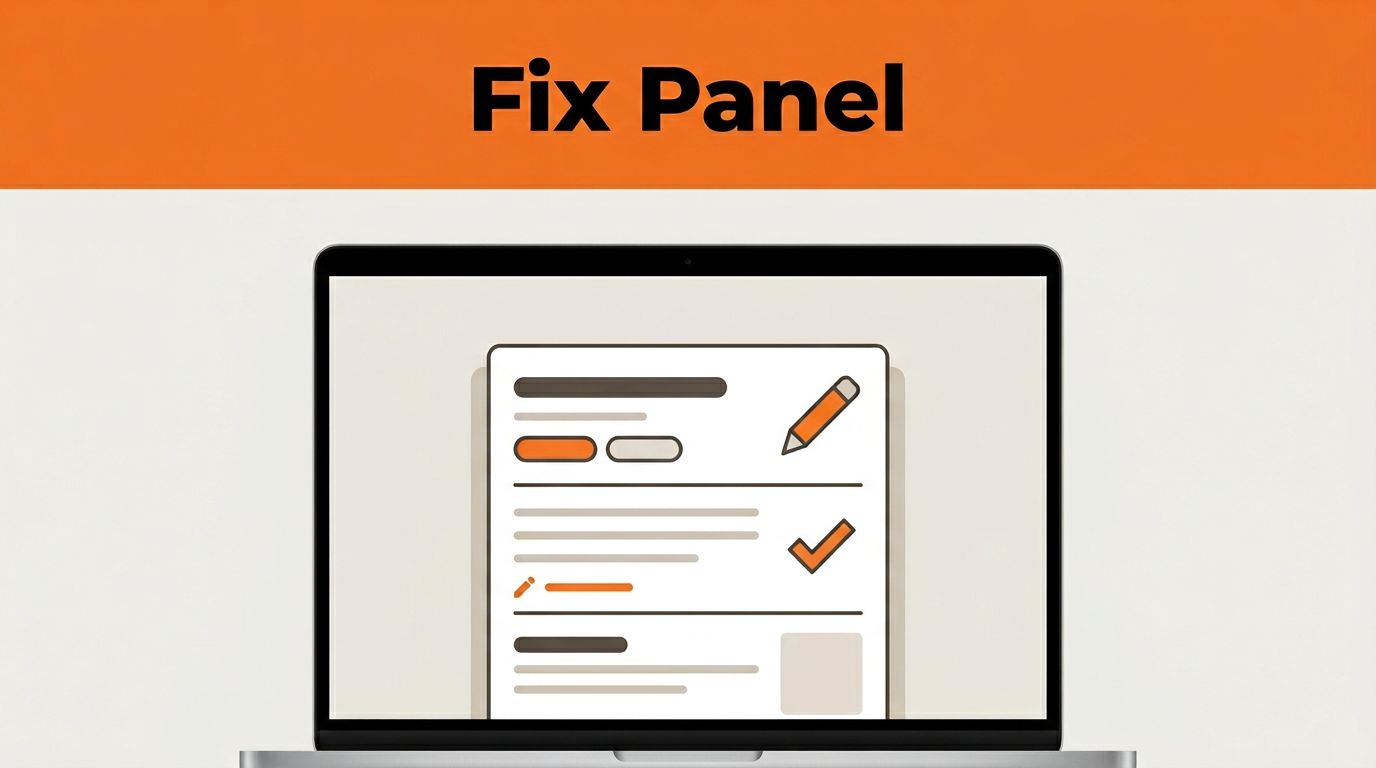
For local businesses, claiming usually starts with a verified Google Business Profile. For people, organizations, and publishers, Google may use other signals, including official sites and connected accounts. Current labels can vary. Some panels show a pencil icon next to a field, while others place Suggest an edit or Feedback near the bottom. If the label Claim this knowledge panel appears, use it. If it doesn’t, you can still submit edits and improve sources.
How to submit a correction that has the best chance of sticking
When teams try to fix Google Knowledge Panel errors with vague notes or weak proof, nothing happens. Google wants clean facts and public evidence to correct incorrect information.
Follow this process:
- Search for the person, business, or brand name while logged in to find the Google Knowledge Panel.
- Open the Google Knowledge Panel and click the pencil icon, Suggest an edit, or Feedback.
- Pick the exact field that is wrong, such as title, bio, image, website, or social media profiles.
- Write a short correction. Keep it factual, not promotional.
- Add the best public proof you have, such as an official About page, a verified company bio, a government record, or authoritative sources.
A simple note works best: “Current title is Chief Marketing Officer, not VP of Sales. Source: official leadership page.” That reads like a fact check, not a sales pitch.
Take screenshots before and after you submit. That gives you a dated record and helps when a client asks why the panel still shows yesterday’s data. Also, don’t spam repeated requests. Conflicting submissions can slow things down.
For business facts like hours, address, phone, or map pin, update Google Business Profile first to ensure NAP consistency. For a person panel, update the official bio page, LinkedIn, speaker pages, and publisher profiles so the same fact appears everywhere. If a logo or headshot is wrong, replace the image on your site and profiles, then wait for recrawling.
If you want a practical field example of how source conflicts create panel issues, this guide to fixing Knowledge Panel errors shows the pattern well.
Frequently Asked Questions
How do I claim a Google Knowledge Panel?
Claiming verifies your official connection to the entity, speeding up edit reviews, but not all panels offer this option. Look for Claim this knowledge panel or a pencil icon; for businesses, start with a verified Google Business Profile, while people and organizations use official sites or connected accounts. It doesn’t grant full control but prioritizes your feedback.
What makes a suggested edit more likely to stick?
Google prioritizes factual, non-promotional corrections backed by public proof like official pages or records. Pick the exact wrong field, write a concise note like “Current title is Chief Marketing Officer—source: official leadership page,” and take screenshots. Repeated vague submissions can delay changes.
Why hasn’t my Knowledge Panel updated after submitting an edit?
Edits go through Google’s review, and panels rely on source consensus; if web pages still conflict, the change stalls. Update your site with schema, Google Business Profile, and profiles first, then third-party sources, and wait for recrawling—source fixes last longer than forms.
Can I fix my panel by editing Wikipedia or Wikidata?
Only make policy-compliant, citation-backed factual updates on those sites, as they influence panels but aren’t for branding. Focus on your controlled sources first, since stronger official pages often override others. Avoid treating them like promotional copy.
When should I hire an online reputation management company for panel issues?
If source conflicts, entity mix-ups, or bad press persist after basic fixes, pros handle structured data, publisher corrections, and local cleanups. Choose firms experienced in entity SEO and reputation repair that explain sources, not just promises—it’s key for AI search and branded visibility.
If Google doesn’t update the panel, fix the web around it
This is where many edits stall. The form submission is fine, but the source pages still disagree.
Start with the pages you control. Treat your main site as the entity home to build entity authority. Update it with schema markup like json-ld schema for person schema and organization schema. Add structured data overall, verify with the rich results test, fix Google Business Profile, and clean up major profiles. Then look at third-party pages. Old publisher bios, stale directory listings, and duplicate business records can keep feeding bad data back into Google.
Common failure points are simple. Your site may still show the old fact. A stronger third-party page may outrank your bio. Google may be confusing your entity with someone who shares the same name. A local brand may also have duplicate listings or an old map record.
For publishers and publicists, check external data sources carefully. If a wikipedia page or wikidata entry is involved, only make policy-safe, factual updates backed by reliable citations. Don’t treat those sites like brand copy.
For SEO teams and brand managers, this often turns into plain reputation management work focused on brand representation. One bad panel can sit beside bad press, weak brand assets, or duplicate local listings in search engine results. That’s when online reputation management overlaps with entity SEO. If harmful or false results also show up in search engine results, the job may shift into online reputation repair services.
If you need outside help, compare online reputation management companies by their evidence, not their promises. A good reputation management company should understand structured data, schema markup, local listings, publisher corrections, and entity reconciliation. An Online Reputation Expert can sort out source conflicts. A Reputation Repair Company should also explain where panel data comes from. Ask whether their Reputation Repair Services cover source cleanup, not only review replies or suppression. That’s the difference between quick patchwork and real online reputation repair, especially when it impacts search engine results.
Still stuck? Search in incognito, confirm the public source changed, and give Google time to recrawl. Then, if needed, use a framework for how to choose the right online reputation management company before you hire one.
Wrong panel info feels public because it is. Still, the fastest fix isn’t brute force. It’s matching the method to the problem, then giving Google consistent facts to trust.
If you remember one thing, remember this: source accuracy usually matters more than the edit form. Once the web agrees on who you are, the panel usually follows.