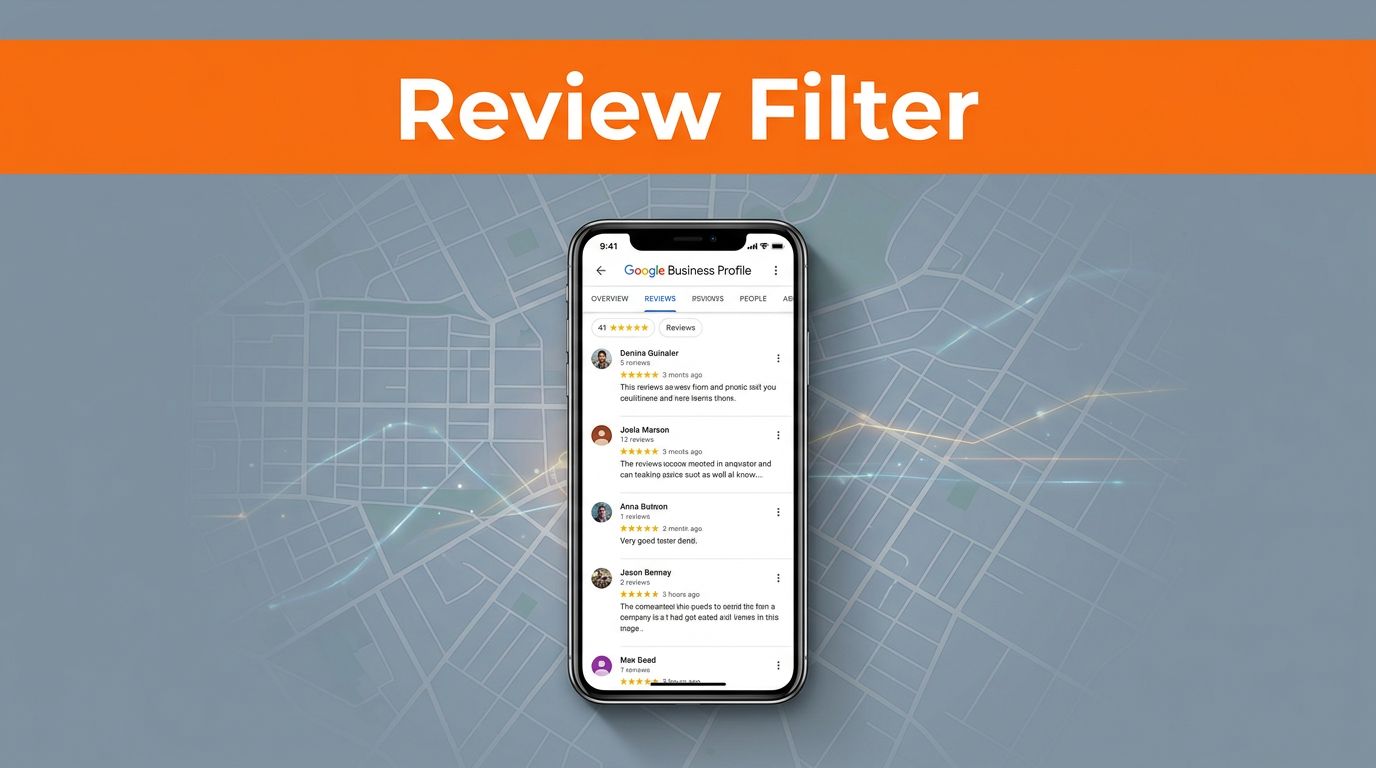

April 2026 changed the tone of Google reviews. If your review process depends on incentives, quotas, or scripted asks, those reviews can now disappear faster than before, hurting visibility on your Google Business Profile.
Google is pushing harder for authentic, organic feedback, while Gemini-powered systems scan online reviews for patterns that look staged. That affects local businesses, agencies, and any team that uses reviews as part of reputation management.
The good news is that compliant review systems are simple once you know the rules. Here is what changed, what Google is watching, and how to keep your review flow safe.
Key Takeaways
- Google’s April 2026 updates crack down on incentivized reviews, staff quotas, review gating, and scripted asks to prioritize authentic customer feedback.
- Gemini-powered filtering scans for suspicious patterns like identical phrasing, sudden review bursts, fake accounts, and device clues, removing policy-violating content faster.
- Safe review requests are neutral, timely, and sent to all customers post-service with no rewards or specific wording to avoid flags.
- Businesses and agencies should audit templates, use compliance checklists, and focus on quality over volume for sustainable reputation management.
- Authenticity now trumps review quantity, protecting Google Business Profiles from penalties.
What changed in Google review policies this spring
Google’s April 2026 updates tightened the rules around how reviews are requested and how they are judged. The biggest shift is simple: Google wants reviews that come from real customers in their own words, not from a process that looks engineered.
That means a few common tactics now carry more risk, as Google cracks down on fake reviews and incentivized reviews that violate its guidelines on prohibited and restricted content. Staff review quotas are out, since self-posting or asking employees to post creates a clear conflict of interest. Asking customers to mention a specific employee by name is out. Incentives such as discounts, prizes, or other rewards are out. Review gating, where only happy customers get asked, can also trigger removals or penalties.
For businesses, the change is not only about what gets posted. It is also about how the request is framed. Google now looks harder at the shape of the whole process, not just the final star rating.
If you want a plain-English refresher on the bigger picture, start with what online reputation management means. Review policy changes are only one part of a much larger trust system.
Google also published its own Maps protection update, which says its systems blocked or removed over 292 million policy-violating reviews in 2025, with a priority on enforcement against fraudulent behavior and illegal activity. That gives a clear signal that enforcement is not light-touch anymore. See Google’s Maps protection update for the company’s public explanation.
How Gemini-powered filtering works in practice
Gemini is helping Google detect fake reviews by reading more than words on a page. It looks for context. That includes timing, account history, device patterns like multiple accounts on the same device that flag fake engagement, network clues, repeated phrasing, and sudden bursts of online reviews.
A five-star review sharing a genuine experience from a long-time customer with normal activity looks different from a review written minutes after checkout from a fresh account. Gemini is built to catch those differences. Search Engine Land reported that Google credits Gemini for better detection of fake business reviews and Google Maps spam, which lines up with the broader enforcement push. Read Google credits Gemini for fake review detection for that coverage.
If a review process looks like rating manipulation, Google’s systems can treat it that way.
The practical result is that review quality now matters more than review volume. A burst of nearly identical praise can look suspicious. So can language that sounds copied, over-guided, or too polished. Even older reviews may be rechecked if they fit a spam pattern.
Search Engine Journal also covered how Google Maps is using Gemini to combat fake reviews and risky edits. That is worth watching because it shows the system is not only checking new reviews. It is also learning from patterns over time. See Google Maps gets an upgrade to combat fake reviews for more detail.
What local businesses should change now
The safest review request is boring in the best way. It should be neutral, timely, and open to every customer. It should also feel like a normal follow-up, not a push for praise.
Here is a quick comparison of common review practices and how they look under the April 2026 rules.
| Practice | Safer in 2026? | Why it matters |
|---|---|---|
| Ask every customer for honest feedback | Yes | It avoids review gating and bias |
| Offer a gift card or discount for reviews | No | Incentives can lead to removals |
| Ask staff to hit a review quota | No | Staff quotas are now a clear risk |
| Ask customers to mention a staff name | No | Specific content requests can be flagged |
| Send a follow-up email after service | Yes | Natural timing looks more organic |
| Ask only happy customers | No | Selective solicitation can look manipulative |
The takeaway is straightforward. Ask everyone, reward no one, and keep the wording open. A dental office can send a short follow-up the day after treatment inviting customers to share their genuine experience in online reviews. A restaurant can include a neutral review link on a receipt for the same purpose. An HVAC company can email after the job is closed. In each case, the request should invite honest feedback, including negative reviews, not steer the outcome.
Businesses that want to stay compliant can benefit from a Review Management Tool to automate these neutral requests.
This is also where online reputation management and compliance meet. If your review flow is part of a larger trust program, it should be built for long-term credibility. A strong reputation management plan does not need tricks. It needs consistency.
What agencies and reputation teams need to watch
For agencies, the policy shift is as much an operations issue as a content issue. A reputation management company should review scripts, SMS flows, email templates, intake forms, and staff training. If those tools still push ratings, name mentions, incentive language, or bulk review requests, the account is exposed.
That matters even more for firms that handle multiple brands. Compliance is now monitored by Google as well as the Federal Trade Commission. Many reputation management companies are now rewriting standard operating procedures because one bad template can affect many clients at once. An Online Reputation Expert should be able to spot risky wording before it gets sent.
If you are building or revising a service stack, online reputation management services should cover review collection, managing negative reviews, response management, reporting reviews that violate policy, and cleanup without crossing policy lines. And if a client is already dealing with filtered reviews or a damaged Google Business Profile, the online reputation repair guide is a better next step than another round of aggressive asking.
This is where online reputation repair becomes practical. Sometimes the right move is to stop the campaign, clean up the language, and rebuild trust slowly. A Reputation Repair Company should be able to explain that difference without hiding behind jargon. The best Reputation Repair Services are built around compliance, not volume.
A good agency process now looks like this. First, it asks whether the request is neutral. Next, it checks timing and audience. Then it confirms that no reward is attached. Finally, it reviews the post-send workflow so replies, removals, and follow-up notes stay within policy.
Compliance checklist for review requests: Google review policies
Use this checklist to keep your review program in line with the April 2026 Google review policies, focusing on avoiding prohibited and restricted content.
- Ask all eligible customers, not just the happiest ones.
- Use neutral language that invites honest feedback.
- Avoid discounts, giveaways, or any review reward to prevent incentivized reviews.
- Do not ask for staff names, scripted phrases, or exact wording.
- Send requests after the service is complete, not during the sale.
- Review your templates, SMS flows, and staff scripts every month.
- Watch for sudden review bursts, duplicate wording, suspicious timing, or fake engagement.
Gemini flags prohibited and restricted content like hate speech, sexually explicit content, inappropriate content, misleading information, harassment, off-topic content, illegal activity, and personal information. Monitor your reviews for these violations.
Pay special attention to hate speech, harassment, sexually explicit content, and inappropriate content, as these common flags often result in review removals.
Focus on genuine customer experience by ensuring reviews avoid fake engagement, incentivized reviews, and community guidelines breaches such as misleading information, off-topic content, or inappropriate content.
If one item on that list feels shaky, fix it before you scale the campaign. Small errors are easier to correct than a wave of removed reviews.
Frequently Asked Questions
What changed in Google review policies in April 2026?
Google tightened rules against incentives like discounts or prizes, staff review quotas, review gating, and requests for specific phrasing or employee names. The focus shifted to authentic, organic feedback judged by the entire request process, not just the final review. Gemini enhances detection, blocking or removing millions of violating reviews as seen in Google’s 2025 Maps update.
How does Gemini detect fake reviews?
Gemini analyzes context beyond words, including timing, account history, repeated phrasing, device patterns, and network clues. It flags bursts of similar reviews or those from new accounts right after service. This leads to better spam removal on Google Maps and Business Profiles, as reported by Search Engine Land and Journal.
What are safe practices for requesting reviews?
Send neutral, open-ended requests to all customers after service via email, SMS, or receipts, inviting honest feedback without rewards. Avoid selective asks or guiding content to prevent looking manipulative. Use tools for automation while following the compliance checklist monthly.
Can businesses offer incentives for Google reviews?
No, incentives like discounts, gift cards, or prizes violate policies and risk review removals. Even implied rewards can trigger Gemini flags for incentivized content. Stick to genuine follow-ups for organic results.
What should agencies and reputation teams do?
Audit scripts, templates, and training for risky language or bulk pushes, ensuring neutral processes across clients. Integrate compliance into online reputation management services, focusing on reporting violations and slow trust-building over volume. Consult experts for repair if profiles are already impacted.
Conclusion
April 2026 made one thing clear, authenticity beats volume in online reviews. Google review policies are now built to favor real customer experience and to filter out patterns that look forced, protecting the Google Business Profile from fake reviews.
For local businesses, that means asking better, not asking more. For agencies, it means tightening the system before Google does it for you.
The safest review strategy is the simplest one: honest requests for new feedback in online reviews, clean timing, reporting reviews that are fraudulent, and no pressure behind the ask. Negative reviews are a natural part of a credible profile.