


Key Takeaways
- Patil co-founded Function to provide a comprehensive preventive health solution.
- She and her co-founders convinced investors of a long-term vision, in part powered by AI.
- Now, Function is in its second act, she says — and is valued at $2.5 billion.
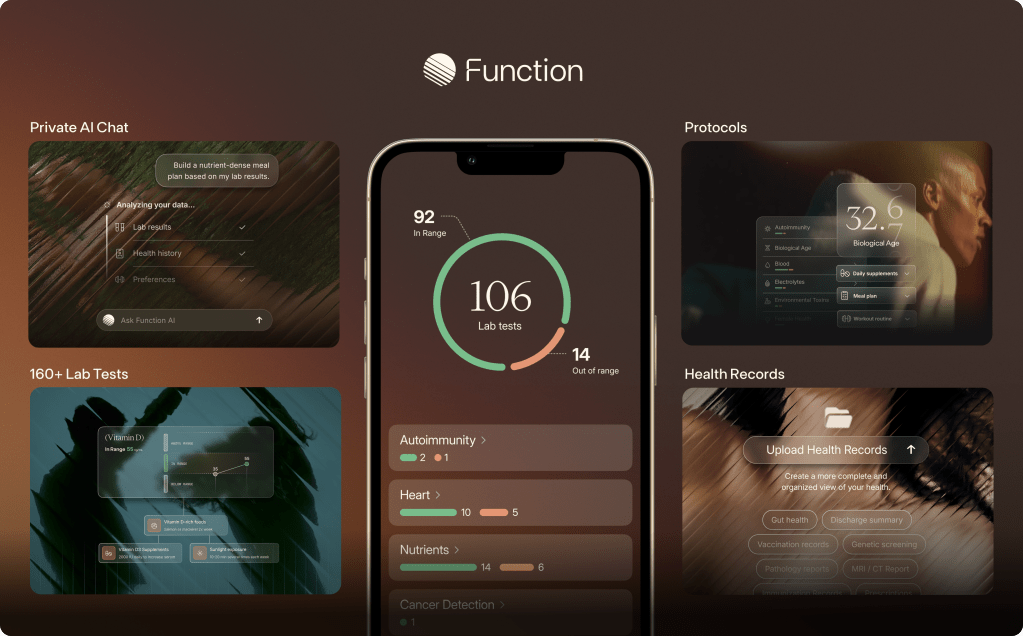
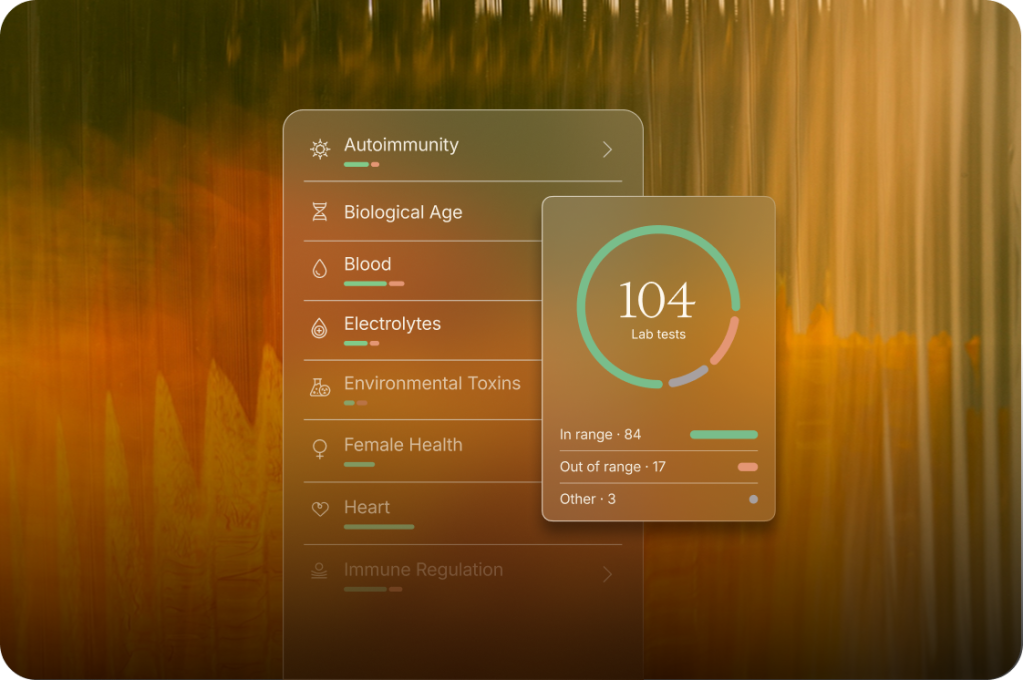
This as-told-to story is based on a conversation with Pranitha Patil, co-founder and chief business officer of preventive health membership platform Function, now valued at $2.5 billion. Function, co-founded by Jonathan Swerdlin (CEO), Dr. Mark Hyman (chief medical officer), Seth Weisfeld (chief design officer) and Dan Swerdlin (general counsel), provides access to more than 160 lab tests, advanced MRI and CT imaging, and AI-powered insights that help members understand what their results mean and which actions to take next. The membership costs $365 annually, compared to roughly $15,000 for comparable testing purchased independently, per the company. The piece has been edited for length and clarity.
The journey to Function started way before 2021, when we officially launched. I experienced a few diagnoses in my teenage years and early 20s. I was diagnosed with PCOS and was pre-diabetic. My HbA1c was always teetering in the 6% range, and I had genetically high cholesterol. I was a young South Asian woman. There wasn’t enough clinical data showing what to do with somebody like me and my picture. The solution was either, “You’re going to live a pretty low-quality life,” or “You have to fix all these things yourself.” I really did feel like I was on my own, tracking my blood work and trying to figure it out. The healthcare system is set up so that you only go once you have a problem. Had I seen these signs way earlier, these markers being elevated, I would’ve done something about it.
Dropping out of Harvard to build Function
I was at Harvard studying for a master’s in design engineering when I came up with the idea to develop a comprehensive preventive health platform. Initially, I thought a product like it must already exist somewhere in the world, but I couldn’t find it. Then I met my co-founder and CEO, Jonathan Swerdlin, and was like, “This product needs to exist.” It was a no-brainer; there wasn’t a lot of hesitation.
I connected with the rest of the co-founding team and had a lot of confidence in the people I’d be working with and the passion behind what we were building. I ended up dropping out of the Harvard program early to bring the company to life. Everything clicked. As co-founders, we have different backgrounds, but we were all driven by giving people the opportunity to own their health. That mission hasn’t changed in the five and a half years since Function’s founding.
The typical annual physical gives you a snapshot of your health at one point in time. Function offers people the most cutting-edge information, and it’s ongoing.
Pitching a big long-term vision to investors
We wanted to start with lab testing in blood and urine, but we always envisioned doing so much more. So the most challenging part in the early days — and this is true of building any company — was convincing investors of the bigger vision when it wasn’t here yet. For us, it was like, “Hey, we’re starting with the most comprehensive lab testing you’ve ever seen, and if you think about that data set that has never been done before, and you add things like imaging, and combine it with AI, and have other types of data sets, picture how incredible that could be.” Investors connected with our ability to communicate this big vision. Before long, we got traction for our Series A. Then the company took off from there. Now Function is valued at $2.5 billion.
Our goal is to reach eight billion people as quickly as possible. We mean that; that’s been the throughline for us since day one. AI is helping us achieve that. We use the technology in a few different ways.
Using AI for communication and medical intelligence
We have our private AI chat, which allows members to communicate with AI after they’ve gotten their results to build a plan, learn what’s going on and get a deeper understanding of what to do next.
Additionally, we’re building a medical intelligence lab that’s bringing together all different types of data — from labs, images, wearable devices, past medical records, etc. — to create this longitudinal picture of someone. That information is summarized in a way that the average person on the street can actually do something about it. Since that hasn’t been done before, the only way to do it is with AI. We’ve got researchers, scientists, clinicians, coders and people who really understand AI working to bring technology and medicine together and make it as clean, accessible and actionable as possible for somebody today.
We’re in our act two as a company. For act one to be successful, we had to lay the foundation with the labs. The lab piece had to be accurate and correct, and get as many people in the door as possible multiple times a year. That behavior shift happened. Now, people are excited about seeing how their labs have changed, or their biological age has come down. But we always knew there was more to build.
Acquisitions were critical to Function’s growth
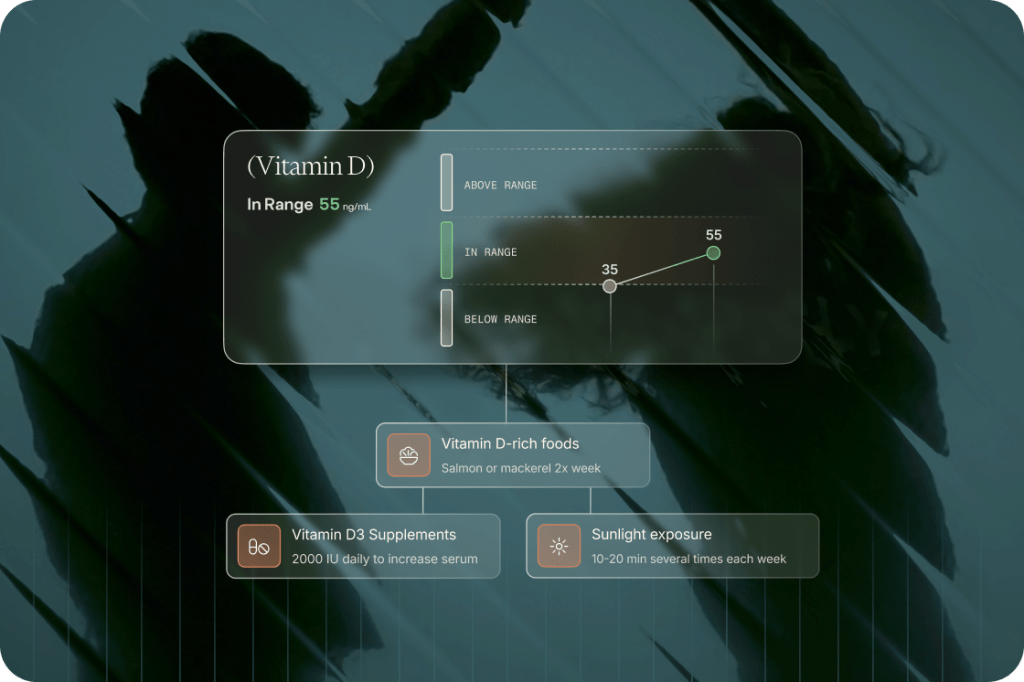
We knew we would need to make some acquisitions to scale, which is why we added imaging, supplement intelligence through SuppCo and home blood draws with Getlabs. It would take too long to build everything in-house. And we needed to make it seamless for people to take action. If we’re telling you to take a supplement or get your blood drawn, we have to make it easy.
We’re never going back to a time where we don’t have access to this data. Once you open Pandora’s box, it’s here. That’s a great responsibility, but it’s also such a cool time to live in because we have the opportunity to actually change health, not healthcare, but the actual health of a population.
When I think about the future, I’m reimagining everything we’ve known about how we interact with our health. This is a new set of expectations and a new set of information. Historically, this has been so severely disconnected, and you’re playing insane Tetris trying to figure out one thing about yourself. I am so excited about a world, whether that’s in three to five years or 10 years, or even sooner, where people can detect a problem before it becomes an actual problem, take action and have a strong relationship with their health. We deserve that. If we can make it that much easier for people, then we’ve done something right.
Building in healthcare for lasting change
I pinch myself that this is the company we built, and so much is still possible. It’s an incredible time to be building in healthcare and see the change from humans around you. So many people want to build in health. The first thing I would say is, if you’re interested in building in this space, it is most certainly bigger than yourself. The work is bigger than you, and the sooner you realize that, the better, because it humbles you in the best way.
But on the flip side of that, healthcare is also one of the messiest industries because you’re working with old-school systems. So acknowledge that. If you’re building for the initial stages, don’t focus so much on what others are doing. If you have an idea that you believe is actually novel and should be in the world, just get started. That’s what someone told me in the early days with Function. You just have to get started. You can iterate. No one’s grading you. There’s so much to be done in this industry compared to the financial industry or any other industry. We’re always 10 years behind most of the big industries. With AI, we have the opportunity to catch up really quickly, but remain human and empathetic.
Key Takeaways
- Patil co-founded Function to provide a comprehensive preventive health solution.
- She and her co-founders convinced investors of a long-term vision, in part powered by AI.
- Now, Function is in its second act, she says — and is valued at $2.5 billion.
This as-told-to story is based on a conversation with Pranitha Patil, co-founder and chief business officer of preventive health membership platform Function, now valued at $2.5 billion. Function, co-founded by Jonathan Swerdlin (CEO), Dr. Mark Hyman (chief medical officer), Seth Weisfeld (chief design officer) and Dan Swerdlin (general counsel), provides access to more than 160 lab tests, advanced MRI and CT imaging, and AI-powered insights that help members understand what their results mean and which actions to take next. The membership costs $365 annually, compared to roughly $15,000 for comparable testing purchased independently, per the company. The piece has been edited for length and clarity.

The journey to Function started way before 2021, when we officially launched. I experienced a few diagnoses in my teenage years and early 20s. I was diagnosed with PCOS and was pre-diabetic. My HbA1c was always teetering in the 6% range, and I had genetically high cholesterol. I was a young South Asian woman. There wasn’t enough clinical data showing what to do with somebody like me and my picture. The solution was either, “You’re going to live a pretty low-quality life,” or “You have to fix all these things yourself.” I really did feel like I was on my own, tracking my blood work and trying to figure it out. The healthcare system is set up so that you only go once you have a problem. Had I seen these signs way earlier, these markers being elevated, I would’ve done something about it.
Dropping out of Harvard to build Function
I was at Harvard studying for a master’s in design engineering when I came up with the idea to develop a comprehensive preventive health platform. Initially, I thought a product like it must already exist somewhere in the world, but I couldn’t find it. Then I met my co-founder and CEO, Jonathan Swerdlin, and was like, “This product needs to exist.” It was a no-brainer; there wasn’t a lot of hesitation.