
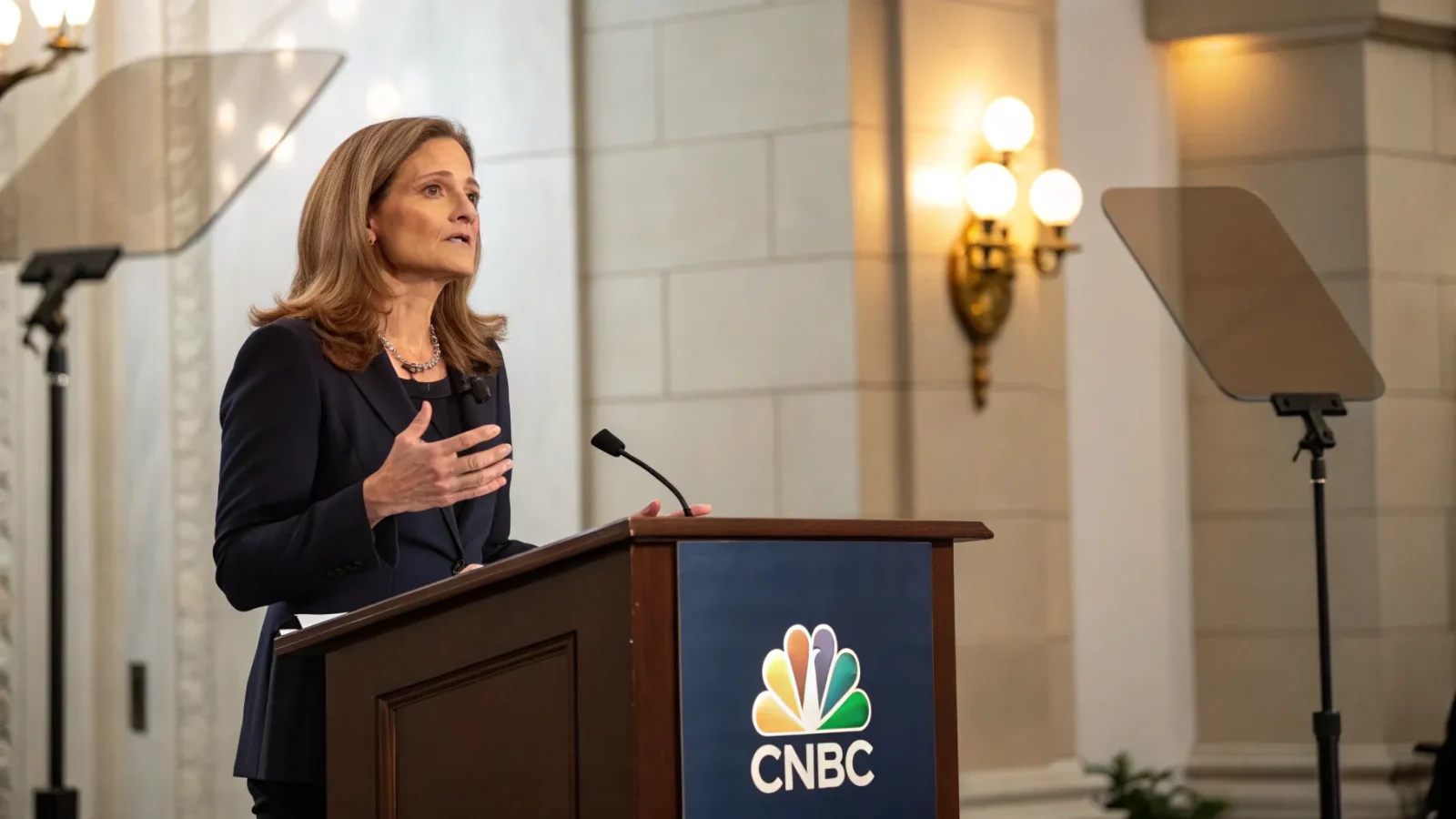

Federal Reserve Governor Michelle Bowman said the central bank must keep its independence on interest-rate decisions, a message delivered as political pressure over borrowing costs grows. Speaking in a CNBC interview ahead of a day-long conference on bank regulation she is hosting at the Fed, Bowman stressed that policy should stay separate from politics while former President Donald Trump criticizes the Fed and Chair Jerome Powell for not cutting rates.
Bowman, appointed to the Fed Board of Governors by Trump and recently elevated by him to be the central bank’s top banking regulator, addressed the tension with a simple point: independence is key to credibility. Her comments put a spotlight on how the Fed navigates political crosswinds while managing inflation, growth, and financial stability.
A Clear Stand on Independence
“It’s very important … that we maintain our independence with respect to monetary policy,” Bowman said.
The statement came as calls for lower borrowing costs echo through political circles. Trump has stepped up criticism of Powell for keeping rates higher than he prefers. The pressure adds to a long history of presidents pushing the Fed to ease policy ahead of elections or during economic slowdowns.
Bowman’s intervention signals an effort to reassure markets and the public. It suggests the Board is focused on inflation and employment data, not political campaigns. While she did not discuss the timing of any rate changes, the message was clear: the policy path will be guided by the Fed’s mandate.
Historical Context and Institutional Guardrails
The Fed’s independence is designed to protect long-term economic health. Congress gave the central bank a dual mandate to pursue maximum employment and stable prices. Central banks with political insulation often hold inflation in check more effectively over time, according to decades of research and international experience.
History offers cautionary tales. Presidents Lyndon Johnson and Richard Nixon both pressed Fed leaders for easier money. Inflation later surged, and the policy unwind proved painful. The memory of those episodes shapes modern Fed communication and strategy. Today, top officials regularly stress that decisions rest on data, not on partisan demands.
The Policy Backdrop: Rates, Inflation, and Growth
The Fed has held rates at elevated levels after a series of increases meant to slow inflation. Price pressures have eased from earlier peaks, but officials have said they need more confidence that inflation is moving sustainably back to target. Labor-market data and consumer spending patterns continue to guide their judgments.
Market expectations for rate cuts have swung with each new data release. Political comments can add noise, but traders still look to official statements, meeting minutes, and economic projections for signals. Bowman’s remarks aim to keep that focus on fundamentals instead of campaign rhetoric.
Bank Regulation and the Broader Agenda
Bowman’s conference on bank regulation comes as the Fed weighs capital rules and supervision lessons from recent bank stresses. Questions about liquidity, interest-rate risk management, and resolution planning remain front of mind. Recent failures have pushed regulators to reexamine how midsize institutions manage shocks.
Her dual role in policy and supervision makes her voice influential. While rate decisions shape the economy, regulation shapes resilience. Strong oversight can reduce the chance that credit strains amplify a downturn when policy is tight.
Reactions and What Comes Next
Supporters of a firm stance on independence argue that credibility keeps inflation expectations anchored, which reduces the cost of bringing prices down. Critics who want faster cuts say high borrowing costs strain households and small businesses, and risk slower job growth.
- Bowman argues policy must follow data, not political pressure.
- Trump has increased criticism of Chair Powell for holding rates steady.
- The Fed continues to weigh inflation progress against growth risks.
Investors will watch upcoming inflation readings, payroll data, and Fed communications. Any signal that inflation is cooling faster could open the door to rate cuts. A hot streak would likely prolong restraint. The regulatory agenda will also matter for bank lending, credit conditions, and market stability.
Bowman’s comments set a firm marker at a sensitive moment. The Fed faces vocal criticism on one side and lingering inflation on the other. The takeaway is straightforward: leaders at the central bank say they will follow the mandate and the data. The next few months of economic reports will test that stance and shape the path for rates, bank oversight, and the broader economy.