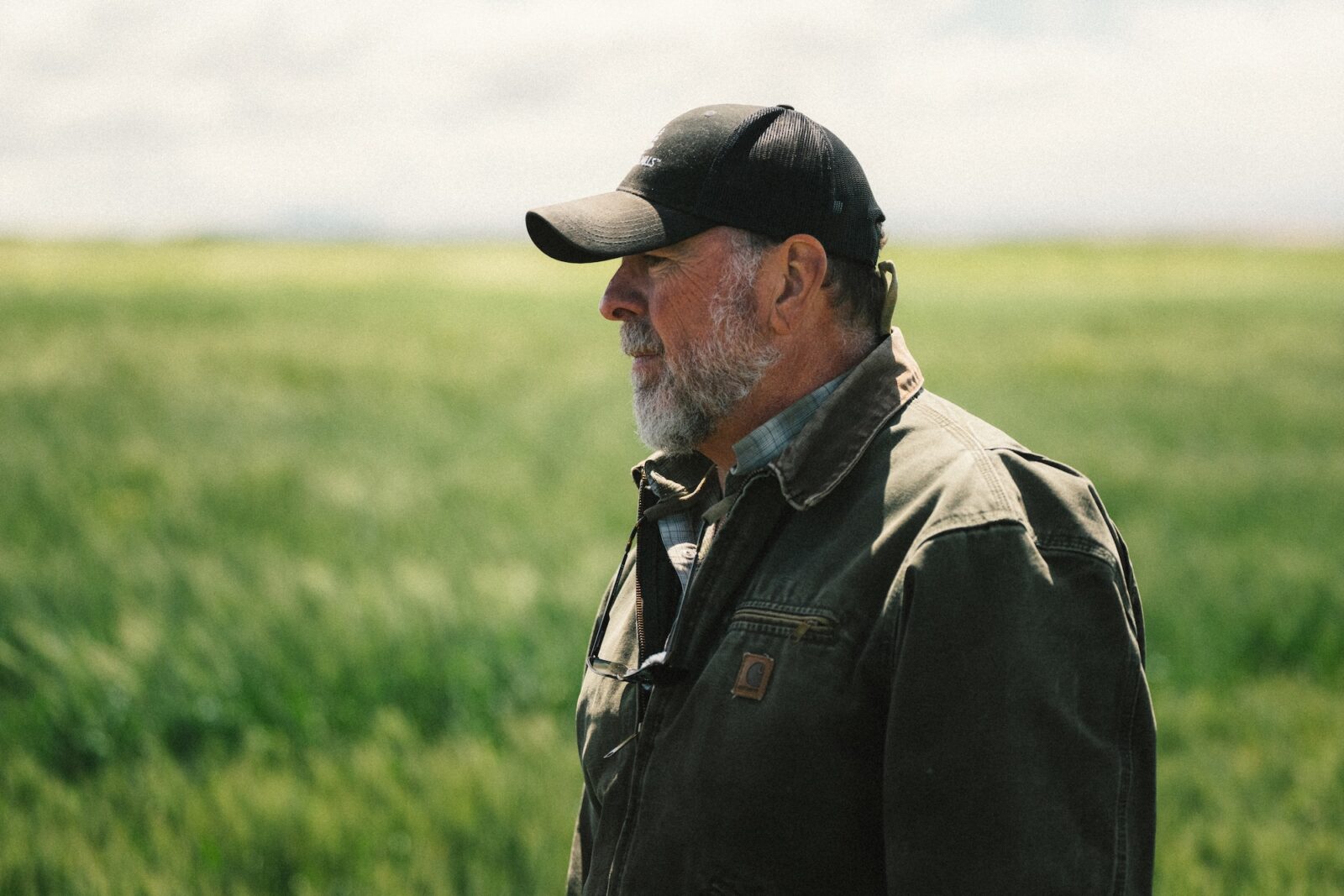

Kevin Morse is on a mission to prove that a food business can be profitable while “adding value rather than extracting it.” As CEO and co-founder of Cairnspring Mills, he’s building modern mills in farming communities, buying identity-preserved grain from farmers and stone-milling it into exceptional flour. After more than a decade in the Skagit Valley, he’s opening Blue Mountain Mill in Pendleton, Oregon, with the Confederated Tribes of the Umatilla Indian Reservation. Below, he shares why wheat is a lot like wine, how his perfect site was the last place he looked and why slow, expensive dreams demand grit.
This interview has been edited for length and clarity.
What makes your product different?
Wheat can be a lot more like wine grapes than most people realize and certainly not what I expected when I started diving into this business. I thought that wheat and flour were all the same. What I discovered totally surprised me.
Most bakers have never had access to the diversity that actually exists in wheat. We’re trying to change that. We work with farmers to grow specific varieties, preserve their identity from the farm through the mill, and bring grains to market that previously weren’t available to most professional or home bakers.
We also stone-mill our flour to preserve more of the natural flavor and nutrition of the grain. Of course, it still has to perform. A professional baker has to be able to depend on our flour every day. So the challenge—and the fun—is delivering flavor, nutrition and identity while producing flour that performs exceptionally well.
What is different about the business structure?
We’re organized as a social-purpose corporation, which gives us the fiduciary flexibility to consider outcomes beyond simply maximizing profit.
That can sound abstract, but for us it translates into very practical decisions. We can donate flour to food banks because feeding people in our community matters. We can give an incremental price break to a young bakery that’s just getting started because helping them succeed may create a great customer and community business for the next 20 years. We can pay a farmer more for growing something differently because we believe there is long-term value in healthier soil.
Those decisions may not maximize the profit on that particular transaction, but they can create enormous value over time. That’s an important distinction for me. We aren’t trying to give value away; we’re trying to keep adding value rather than extracting it. Our investors are part of that. Their capital makes this work possible, and we have a responsibility to build a business that earns them a return. We still have to build a financially strong, profitable company. Profit gives us the ability to keep investing in farmers, employees, customers, and communities while rewarding the people who invested in us. It just isn’t the only outcome we measure.
Can you summarize farmers’ plight and how you’re aiming to help?
Commodity agriculture has become a race to the bottom. Farmers carry tremendous risk—weather, markets, equipment, land and rising input costs—but in most cases they have very little control over the price they’re paid. The pressure is constant to get bigger, produce more and lower costs.
We’re trying, in our small way, to create an alternative.
Rather than asking how cheaply we can buy wheat, we’re trying to create a higher-value domestic market for farmers. We contract directly with growers, create markets for differentiated varieties and regenerative practices, and provide greater predictability around what we’re going to buy and what we’re going to pay.
If we do it well, farmers get a better, more predictable bottom line, while also having more opportunity to invest in the long-term health and viability of their soil and farm.
I keep coming back to the idea that regenerative agriculture also has to be economically regenerative. We can’t ask farmers to improve the health of the land while participating in an economic system that slowly puts them out of business.
What made you decide that this was the right time to open Blue Mountain Mill in Pendleton, Oregon?
Blue Mountain is the result of more than a decade of learning at our first mill in the Skagit Valley. We demonstrated demand for what we were doing and eventually reached the point where our ambitions and customer demand outgrew what that mill could produce.
Pendleton also has three things that are incredibly important to our model: access to some of the best wheat-growing land in the country, access to the markets we want to serve, and an existing community of farmers already practicing regenerative agriculture.
That combination is difficult to find. We also knew a second mill would allow us to test whether the model we’ve developed in Skagit could work at a significantly larger scale and in another region.
There was no moment when all the risk disappeared and it suddenly became obvious that we should build it. At some point, as an entrepreneur, you have to decide whether you’ve learned enough, whether the opportunity is real, and whether you’re willing to take the next risk. We decided we were.
How did you arrive at the partnership with the Confederated Tribes of the Umatilla Indian Reservation?
Ironically, the Confederated Tribes of the Umatilla Indian Reservation location was the last place I looked.
We originally wanted fee-simple property that we could purchase outright. I probably looked at 20 different sites, and for one reason or another, none of them felt right. I had been encouraged to look at Coyote Business Park on the Umatilla Indian Reservation, but because it didn’t fit that original model, I kept looking elsewhere.
Eventually, I agreed to go see it. The infrastructure and access were nearly perfect for what we needed—and it didn’t hurt that the site has an incredible view of the Blue Mountains. But what ultimately sealed the deal was something I hadn’t been looking for on a real estate checklist: alignment with the Tribe.
As we got to know one another, we discovered shared values around stewardship, agriculture, community, economic development and building something that could create lasting value in the region. What began as a search for a piece of real estate became a much deeper partnership.
There’s probably an entrepreneurial lesson in that for me. Sometimes being too constrained by what you think the answer is supposed to look like prevents you from seeing a much better answer sitting right in front of you.
Milling infrastructure isn’t a software business — it’s slow, physical and expensive. What would you tell a founder who’s drawn to a similarly capital-heavy, long-payback idea about whether it’s worth it?
If you’re looking to make a quick fortune, this probably isn’t the business for you.
Building physical infrastructure requires an enormous amount of patience, commitment and perseverance. It will probably take longer than you think, cost more than you think, and present problems you couldn’t possibly have anticipated when you started.
You need capital, obviously, but you also need grit. There have been plenty of times during Cairnspring’s journey when the easiest or most conventional answer would have been to stop. We kept looking for another path.
That doesn’t mean blindly sticking with a bad idea. Caring about the mission doesn’t excuse you from making good business decisions. You have to be rigorous about costs, demand and how the business will earn a return on the capital it takes to build it. You have to constantly listen, learn and adapt. But I’ve learned there’s an important difference between being flexible about how you get somewhere and being committed to where you’re trying to go.
What’s something about running a social-purpose corporation that surprised you — harder or easier than you expected?
One thing I’ve learned is that having a social purpose doesn’t necessarily make decisions easier. Sometimes it makes them harder because you’re intentionally considering more than one outcome.
It’s relatively easy to maximize a single variable. It gets more complicated when you’re asking what’s best for the financial health of the company, our employees, farmers, customers, communities and the environment—and those answers don’t always point in exactly the same direction.
The surprising part is that I’ve also seen how often those interests reinforce each other over the long term. Helping a young bakery get established can create a loyal customer. Paying a farmer fairly can create a dependable long-term supply relationship. Investing in employees creates people who are deeply committed to the company.
I’ve become less interested in whether something maximizes the value of an individual transaction and more interested in whether we’re creating lasting value through the relationship.
That doesn’t remove the tension. We still have to make money, and sometimes we have to make difficult decisions. But the social-purpose structure gives us permission to define success more broadly than the next quarter’s bottom line.
Photo credit: Andrew M. Snyder for Cairnspring Mills
What is your ultimate goal and what does success look like to you?
My goal isn’t to build the biggest flour company in America.
I’d like Cairnspring to help demonstrate that regional, human-scale food infrastructure can be economically successful while creating value far beyond the bottom line.
Our vision is a world nourished by cleaner, healthier grains grown regeneratively and milled close to home. Success would mean healthier soil, more nutritious and flavorful food, prosperous farmers, good jobs, thriving local businesses and communities that are more resilient because some of the infrastructure and economic value of their food system has returned home.
I’d also like what we’re doing to inspire others. Cairnspring doesn’t need to own every mill, and we’re certainly not going to solve these problems ourselves. In fact, real success would mean other entrepreneurs, farmers and communities take what we’ve learned, improve upon it and build models of their own.
Kevin Morse is on a mission to prove that a food business can be profitable while “adding value rather than extracting it.” As CEO and co-founder of Cairnspring Mills, he’s building modern mills in farming communities, buying identity-preserved grain from farmers and stone-milling it into exceptional flour. After more than a decade in the Skagit Valley, he’s opening Blue Mountain Mill in Pendleton, Oregon, with the Confederated Tribes of the Umatilla Indian Reservation. Below, he shares why wheat is a lot like wine, how his perfect site was the last place he looked and why slow, expensive dreams demand grit.
This interview has been edited for length and clarity.
What makes your product different?
Wheat can be a lot more like wine grapes than most people realize and certainly not what I expected when I started diving into this business. I thought that wheat and flour were all the same. What I discovered totally surprised me.