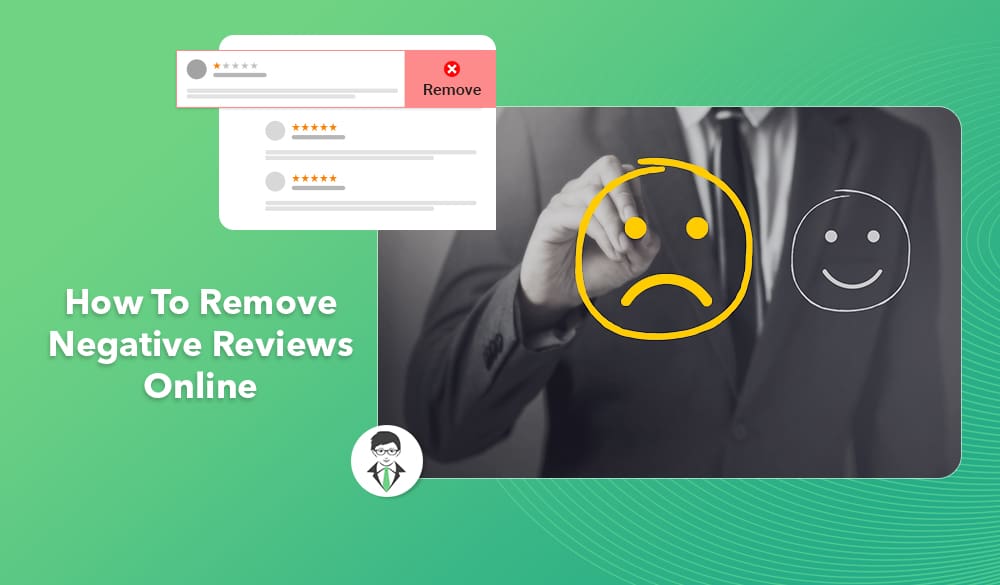

Can negative reviews be removed? Sometimes, but only when they violate a platform’s content policies. Reviews that are fake, defamatory, spammy or otherwise prohibited may qualify for removal. However, legitimate negative reviews generally can’t be deleted simply because they’re unfavorable.
For professionals, business reputation directly impacts revenue and growth. This means understanding the difference is critical. The most effective strategy is to report reviews that violate platform guidelines, respond professionally to valid criticism, encourage satisfied customers to share honest feedback and reduce the visibility of damaging content that cannot be removed.
Online reviews play a major role in how customers evaluate your business. This makes reputation management an essential part of long-term success. In this guide on how to remove negative reviews online, you’ll learn how review removal works, when reporting a review makes sense and what steps to take when removal is not an option. For organizations that need additional support, our professional review management services cover a comprehensive report, respond, outweigh and suppress strategy.
Key Takeaways
- Review platforms typically remove reviews only when they violate published policies, not simply because they are negative.
- You cannot delete a Google review yourself. You can only report it and request that Google evaluate it for removal.
- FTC regulations prohibit fake reviews, purchased reviews and practices that suppress or hide legitimate customer feedback.
- A professional, timely response to a negative review can often reduce its impact and demonstrate credibility to potential customers.
- When a review cannot be removed, strengthening your online presence with authentic positive reviews and quality content is often the most effective solution.
- Businesses facing coordinated fake review attacks or significant reputation damage may benefit from professional reputation management services or legal guidance.
How Negative Reviews Affect Your Online Reputation
Negative reviews can influence customer trust and purchasing decisions. They also impact how your business appears in search results. An inappropriate or negative review may appear in the top search results on search engines like Google or Bing. This type of prominent visibility means that potential customers are more likely to see unflattering customer comments and poor reviews before they get to positive ones.
When negative ratings or remarks surface on Google, it can feel like a personal attack. But while it’s never fun to be criticized online, it’s important to pay attention to bad reviews. Instead of diving straight into how to remove negative reviews, consider how you can transform the experience into a positive one.
In fact, taking the time to respond to any review, both positive and negative, can help shape how prospective customers view your business. In the case of a bad Google review (or several), people who post them typically appreciate it when a business owner responds. This allows you to rebuild trust which is a critical component of your online reputation. Online review responses are an extension of your online reputation management (ORM) efforts.
Request a Free Consultation
The Impact of Negative Reviews on Your Business Reputation
As a business owner, your web presence is made up of many factors and each influences how your company is perceived on the internet. This perception helps guide consumers’ purchasing decisions.
When negative feedback and negative content about your company can be found in Google reviews, your business reputation is at risk. Most consumers turn to the web to learn about companies before deciding to do business with them. Negative and fake Google reviews can have a powerful effect on those decisions. Consider these findings from the 2025 BrightLocal Local Consumer Review Survey:
- Only 4% of consumers say they never read online business reviews before choosing a local business.
- 74% of consumers use at least two review sites when researching businesses.
- 42% of consumers trust online reviews as much as personal recommendations from friends and family.
In simpler terms, negative information stands between you and business growth. If negative search results are cutting into the quality of your online presence, online reputation management is a valuable solution.
Think about your own experiences as a consumer. Chances are, you’ve turned to Google to research businesses in your area before making a purchase decision. The last time you looked up a company, did you read online reviews? What did those reviews tell you about the business in question? Did the business seem trustworthy? Or was a particularly bad Google review part of the picture?
Positive online reviews build trust while negative online reviews can erode it. With enough bad reviews on Google, your chance of missing out on new customers increases drastically. This could potentially damage both your reputation and your revenue. Beyond customer perception, review volume and review recency can also influence local search visibility. This means that a steady stream of recent, authentic reviews is important for both trust and discoverability.
The Connection Between Google Maps and Google Reviews
Unless you’re running a business that’s 100% virtual, your business will likely show up on Google Maps. When someone searches for the location of your business or looks for businesses in a specific area and yours is among the results, your Google reviews will display alongside your Google Business Profile information in Google Maps.
The first thing a user will usually see is your business’s star rating followed by your review count and other profile details. After selecting your business, they can view additional review information directly from the profile including recent reviews and ratings.
It’s helpful to know that your Google Maps listing prominently displays your Google reviews. Otherwise, you might assume that most customers are searching for your location on Google Maps and they won’t see your reviews at all so there’s no point in addressing harmful ones. In reality, reviews are one of the most visible parts of your Google Business Profile and often play a major role in whether a customer chooses your business over a competitor.
Risks Associated with Negative Online Reviews
There are three major consequences of having negative reviews about your business online. Let’s explore each of them in more detail.
Negative Online Reviews Can Appear on Other Sites
Negative online reviews can spread beyond the platform where they were originally posted. If you don’t address them when you have the opportunity to then they can appear on additional websites. This creates a larger problem that’s even harder to get on top of. Before poor reviews get out of hand, respond to them everywhere whether they’re in the Google reviews section, on social media or elsewhere.
Bad news travels fast. A negative comment someone publishes on BBB or in Google reviews may suddenly be shared across other review sites or social media platforms. If the reviewer has a large social media following, many more people could see the post as it spreads.
You May Lose Customers Quickly
Negative reviews can influence purchasing decisions and lead potential customers to choose a competitor. People tend to choose a company’s products or services based on review websites including Google Reviews. One fake negative Google review or an inappropriate review can cause a chain reaction and you could lose customers fast. That’s why it’s important to address negative reviews promptly and pursue removal when a review violates platform policies.
For example, let’s say you own a pizzeria. You receive one negative review on the BBB regarding your food or customer service. If someone uses the BBB website or app to look up information about your business before ordering, they could see the bad review and decide against going to your establishment.
A perfect example of this is Ripoff Report. With millions of records and high domain authority, this review platform can easily shut down a small business. If you’re struggling with a negative article or Ripoff Report entry, contact us today for Ripoff Report removal.
More Negative Reviews May Follow
One negative review can sometimes encourage additional customers to share similar experiences. When one person writes a negative Google review, others may feel more comfortable posting their own feedback as well.
Unfortunately, some of these posts can be fake or defamatory. Although most review sites have protections in place to prevent such reviews from being posted, those systems are not foolproof.
You cannot prevent every negative review from being published but you can be diligent about spotting false or unflattering reviews and responding to customers promptly. Consistent engagement can help prevent isolated complaints from turning into a larger reputation problem.
Can You Remove a Negative Review?
Yes but only in limited cases. A negative review can usually be removed only if it violates the platform’s content policy, is clearly fake or defamatory or was posted by someone who was never actually a customer. Honest opinions, even if they’re harsh or unfair, are typically protected and will not be removed. Under the Communications Decency Act Section 230, platforms like Google aren’t required to remove third-party content simply because a business disagrees with it.
There are three legitimate pathways for addressing negative reviews depending on the situation.
First, you can report and request removal when a review violates platform guidelines or appears to be fake. This process is outlined in the Google Business Profile Help Center where businesses can flag inappropriate content for review and potential removal.
Second, in cases that involve defamation or serious false statements, legal action may be required. This can include working with an attorney to pursue a court order or a formal legal process that compels removal. For more context on legal exposure related to online reviews, see our guide on legal risks of reviews.
Third, when removal isn’t possible, suppression is the most common and practical approach. This involves building a stronger presence of recent, authentic positive reviews and high-quality content so that negative results become less visible over time.
Most businesses will need a combination of these approaches and outcomes will vary depending on the specific platform and case. No legitimate service or ORM provider can guarantee review removal in all situations.
It’s important to avoid improper removal tactics. Strategies like submitting fake DMCA notices, mass-flagging legitimate reviews or buying fake positive reviews can violate platform policies. It can also lead to additional legal or reputational risks. Trusted platforms prioritize authentic feedback and attempting to manipulate reviews can often backfire rather than resolve the issue.
What Types of Reviews Qualify for Removal
Not every negative review can be removed but platforms like Google will take action on specific types of content that violate their policies. Below are the most common categories that usually qualify for removal:
- Spam or fake reviews: Reviews posted by bots, competitors or users who clearly did not have a real experience with the business.
- Conflict-of-interest reviews: Reviews written by current or former employees or competitors attempting to manipulate ratings.
- Off-topic content: Posts that do not describe an actual customer experience (for example, political commentary or unrelated complaints)
- Harassment or threats: Content that targets individuals or businesses with abusive language, threats or intimidation
- Hate speech or discriminatory content: Reviews that include slurs or attacks based on protected characteristics.
- Profanity or obscene content: Excessively vulgar language that violates platform content standards.
- Personal or confidential information: Reviews that expose private details such as phone numbers and addresses or other sensitive data.
- Impersonation: Reviews posted by someone pretending to be another person or misrepresenting their identity or experience.
These categories are drawn from platform policies such as Google’s prohibited and restricted content guidelines for reviews which outline when content is eligible for removal.
Each platform applies these rules a little differently so outcomes may vary depending on where the review is posted. Platform-specific reporting steps are outlined in the sections below. Keep in mind that there are also clear limits to what does not qualify for removal. A low-star rating on its own is not removable. Neither is an honest but negative customer experience, even if the business disagrees with the reviewer’s interpretation.
Simply put, truthful feedback, even if unflattering, generally remains visible because it doesn’t violate content policy. Removal is reserved for policy violations, not dissatisfaction or disagreement and understanding this distinction is key.
How to Report and Remove a Negative Google Review
You cannot directly delete a Google review yourself. You can only request removal when a review violates Google’s policies and Google ultimately decides when to take action.
To start the process, first search for your business on Google or open your Google Business Profile. From there, go to the Reviews section and locate the specific review you want to report. Click the three-dot menu next to the review (or the flag/report option, depending on the interface). Then, select the reason you believe the review violates Google’s policies such as spam, harassment, conflict of interest or fake content. After selecting the appropriate category, submit the report for Google to review.
For a more detailed walkthrough of each step, you can refer to our step-by-step guide to removing a Google review.
After submission, you can track the status of your report through Google’s review management or support tools inside your Business Profile dashboard. This allows you to see whether the review is under review, actioned or declined.
If Google determines the review does not violate policy, it will remain published. In those cases, businesses can submit a one-time appeal through Google’s review dispute process. This can be particularly helpful if new evidence is available or the initial review was misunderstood. Check out our guide on how to dispute a Google review hurting your business for more information.
Before taking any action, carefully review each comment. Some negative reviews reflect legitimate customer experiences and may highlight actual operational issues that need attention. Others may come from competitors, former employees or users with no verified interaction.
The goal isn’t to remove every negative opinion but to report only those that violate policy and manage the rest through professional response and reputation strategies.
How to Remove Reviews on Yelp, Facebook, the BBB, Trustpilot and Glassdoor
Each review platform has its own rules and reporting processes as well as thresholds for removal. In most cases, only content that violates specific guidelines will be taken down while negative opinions are usually allowed to remain.
Yelp
On Yelp, only reviews that violate content guidelines (spam, conflict of interest, harassment or irrelevant content) can be flagged for removal. Business owners can respond to reviews and flag them through their Yelp Business account but Yelp is known for rarely removing reviews unless there is a clear policy violation. In many cases, Yelp relies on its recommendation software to filter questionable content rather than deleting it outright.
On Meta platforms such as Facebook, reviews can be reported directly from the business page by clicking the three-dot menu next to the review and selecting “Find support or report recommendation.” Removal is typically limited to spam, hate speech or any content that violates Meta’s Community Standards. For a more comprehensive look at managing visibility and reputation across Facebook, see our guide on managing your Facebook reputation.
Better Business Bureau (BBB)
On the BBB, businesses cannot simply delete complaints or reviews. Instead, they can respond publicly and formally dispute claims through the BBB’s complaint resolution process. The BBB acts as a mediator and outcomes depend on evidence from both parties. For step-by-step guidance, see our resource on removing a BBB complaint.
Trustpilot
On Trustpilot, reviews can be flagged for investigation if they violate guidelines such as fake content or misuse. Trustpilot encourages open reviews but will remove fake content after it verifies that a policy breach has occurred. If your business is dealing with fraudulent or harmful reviews, check out our guide on removing fake reviews from Trustpilot to see the reporting process in more detail.
Glassdoor
On Glassdoor, employer reviews are generally anonymous and protected to encourage employee feedback. Companies can flag reviews only if they violate guidelines such as harassment or confidentiality breaches. Because of these strong anonymity protections, removal is limited and often requires clear policy violations or legal escalation. For more context on how anonymity works, see our answer to Are Indeed Reviews Anonymous?
Across all platforms, removal is not guaranteed and is typically reserved for clear violations. Most businesses will need a combination of reporting, response strategy, monitoring and reputation building to manage their overall online presence.
How the FTC’s Fake-Review Rule Changes the Game
The Federal Trade Commission (FTC)’s Rule on the Use of Consumer Reviews and Testimonials establishes clear federal standards for how reviews can be collected and shared online. It clearly prohibits businesses from the following actions:
- Buying or selling fake reviews
- Using AI-generated testimonials that misrepresent real customer experiences
- Engaging in unethical tactics to hide or bury negative feedback on company websites
The rule also authorizes civil penalties for violations which can be enforced against businesses that engage in deceptive review practices.
This means you cannot pay to fabricate positive reviews or artificially suppress legitimate negative ones. At the same time, competitors who post fake negative reviews aren’t just violating platform guidelines. They may also be violating federal law which strengthens your case when reporting fraudulent content for removal.
How Can I Remove Fake Reviews?
A growing concern for business owners is the increase in false reviews posted by people who didn’t even visit the business in question. In some cases, these fake reviews contain misleading or defamatory claims. When this happens, negative content can appear in search results for your business and directly impact trust and conversions.
Luckily, fake or false reviews are often easier to address than subjective negative feedback. Most platforms allow businesses to flag suspected fraudulent content for removal. On Google, for example, you can report the review directly from your Business Profile and select a reason (such as spam or conflict of interest). In other cases, submitting a formal takedown request to the platform’s support team can also trigger a content review.
Look for common indicators of fake reviews such as:
- Reviewers with no prior platform activity
- Vague or off-topic complaints that don’t match your services
- Unusual timing patterns (such as multiple similar reviews in a short window)
- Language that suggests the reviewer never engaged with your business
If platform reporting doesn’t solve the issue then you can escalate concerns by reporting review fraud directly to the FTC through its consumer complaint system. For a deeper breakdown, learn more about how fake online reviews are now banned by the FTC.
Most of the time, successful removal requires clearly documenting policy violations and using both platform reporting tools and regulatory channels where appropriate.
How to Respond to Negative Reviews
When it comes to poor business reviews, many business owners first ask: How do you remove a negative review? Can I remove a bad Google review? How do I remove a BBB complaint?
While removal is sometimes possible, learning how to respond to negative reviews is often even more important because a public response is visible to every future customer who reads the thread.
A calm and professional reply can do more to protect your reputation than deletion alone. It shows accountability and transparency in real time which helps neutralize the impact of criticism.
Five Tips for Responding to Bad Reviews
- Respond quickly and acknowledge the issue: The faster you address a complaint, the more likely it is that the customer will remain open to resolution. Avoid ignoring the situation or shifting blame. Start by recognizing their experience and expressing that you could have done better.
- Personalize every response: Avoid generic replies and reference specific details when appropriate so the customer knows they’re being heard and not handled by a script.
- Ask clarifying questions to better understand what happened: Open-ended questions encourage dialogue and can reveal misunderstandings or operational gaps that need attention. This also helps prevent repeat issues.
- Stay calm and validate the customer’s perspective, even if you disagree: The goal is not to “win” the argument but to de-escalate it and rebuild trust. A customer’s perception is their reality and addressing it constructively often leads to better outcomes.
- Use the feedback as an improvement tool: Negative reviews often highlight service gaps or operational issues that may otherwise go unnoticed. Treat them as learning opportunities to improve your business over time.
In some cases, a well-handled response can even turn a dissatisfied customer into a returning one. This is where the concept of turning negative reviews into positive outcomes comes in. The goal isn’t just damage control but recovery and long-term trust building.
Here is a simple response template you can adapt:
Thank you for sharing your feedback. We’re sorry to hear about your experience and appreciate you bringing this to our attention. We take concerns like this seriously and would like to learn more so we can make it right. Please reach out to us directly at [contact information] so we can address this further.
Learn more about how to respond to negative reviews in our online guide.
Remember that consistent and professional engagement matters as much as review removal. Over time, thoughtful responses, combined with efforts to encourage satisfied customers to share feedback, can significantly shift perception. For strategies on this specific side of reputation building, see our guide on how to get more positive Google reviews.
When to Hire a Review Removal Service
Many business owners underestimate how much influence online reviews have on customer decision-making. Some assume that negative or fake Google reviews will be ignored so they delay taking action on reputation issues or structured review management. In reality, reviews often shape first impressions long before a customer ever contacts a business.
There are many situations where professional help becomes necessary. These include:
- Coordinated fake-review attacks
- Clear cases of defamation
- Multi-platform reputation damage
- Reviews for industries such as healthcare or legal that can directly impact referrals, trust and even create a compliance risk
In these scenarios, the volume and complexity of the content can make a DIY approach ineffective.
A legitimate review or reputation management service will not “magically delete” reviews. Instead, the team will work within platform rules and legal frameworks to investigate and document policy violations, submit structured review requests, manage appeals at scale and coordinate escalation when content crosses into defamation or poses a legal risk. In more serious cases, this may also involve working alongside legal counsel to pursue formal takedown processes.
These services focus on building and amplifying positive, authentic content so that negative or unremovable results are pushed lower in visibility over time.
Note that any provider that guarantees the removal of any review for a flat fee, relies on mass-flagging campaigns, uses fake DMCA notes or fabricates reviews is operating outside of platform rules. This can create additional legal or reputational exposure rather than resolve it.
When used appropriately, professional support is not about erasing criticism. It’s about restoring accuracy and ensuring that legitimate customer feedback isn’t drowned out by violations or manipulation.
For businesses dealing with ongoing or complex reputation challenges, we offer structured support through our business review management services. For more advanced cases involving defamation and cross-platform suppression, check out our content removal services.
Suppression: What to Do When a Review Cannot Be Removed
With so many people turning to Google Search and Google Reviews to evaluate businesses before making purchasing decisions, even a single unflattering review can influence customer trust and redirect prospective buyers to competitors. This is why review management and ongoing monitoring are essential parts of maintaining a strong digital presence.
Within a wider ORM strategy, these efforts support a third core approach: content suppression. Suppression does not remove content at its source. Instead, it reduces the visibility of damaging search results and reviews by strengthening the presence of more relevant and positive content. The goal is to push unfavorable results lower in search rankings and review visibility over time, making them less likely to influence customer decisions.
This process is driven by several ORM components:
- Content Creation: Publishing high-quality, positive content across web pages, social media, articles and other branded assets helps improve how search engines interpret and rank your online presence.
- Building Web Properties: Developing and maintaining assets such as social media profiles, blogs, websites and business directory listings increases the number of authoritative touchpoints associated with your brand which dilutes the impact of negative results.
- Reputation Monitoring: Continuous monitoring allows businesses to identify new reviews or emerging issues early so they can respond quickly before they escalate into larger visibility problems.
Together, these elements form the foundation of an effective suppression strategy. Rather than offering instant results, suppression is more gradual and ongoing, requiring consistent effort and optimization. There are no guaranteed rankings or fixed timelines because search visibility is influenced by many external factors including platform algorithms and competitor activity.
Our 4-Step Approach to Removing Negative Reviews
Two of the questions that people ask us most often are:
Over the past decade, our online reputation management team has devised the perfect service for removing poor reviews. Here is our four-step approach to help you remove bad Google reviews:
- Discover if there is anything you can do to fix the most common and legitimate complaints and then resolve those issues.
- Report reviews that are fraudulent, derogatory or slanderous or not genuine complaints. You don’t want to inadvertently anger honest reviewers and cause them to leave more negative reviews elsewhere.
- Reply to all real comments whether they are good reviews or negative ones while being professional and polite.
- Fill the internet with positive content about yourself or your business. This happens by developing online platforms (websites, social media profiles, etc.), creating content and encouraging positive reviews.
Once you understand how drastically a negative Google review or bad feedback on sites like BBB can harm your reputation, it may be time to call a reputation management company. The online reputation experts at NetReputation offer professional services to help you with negative review removal and the suppression of articles that damage you or your company’s name. We can help you restore your reputation and take back control of your web presence.
Review Removal with NetReputation
If you’re dealing with negative online reviews or a brand crisis, you may need online reputation management services to remove a negative online review.
NetReputation is the leading online reputation management services provider. We’ve helped thousands of clients take charge of their online presence and overcome the damage that poor reviews can have on their business prospects.
After an initial consultation, our team will develop a plan to remove the reviews that are harming your company. Review removal is not the only tactic we use; review management is another valuable service that can help you control exactly what others are saying about you.
Finally, monitoring for emerging threats including new reviews that put your company in a negative light, can keep your reputation strong.
Frequently Asked Questions
Below are answers to some of the most common questions we receive about removing negative reviews online.
Can you remove a negative review?
Yes but only if it violates the platform’s content policies. Fake, spam, defamatory or inappropriate reviews may be eligible for removal but honest negative opinions will usually remain visible.
Can you delete a Google review you do not like?
No. Business owners cannot delete reviews simply because they disagree with them. You can only report a Google review if it violates Google’s guidelines. Then, you can request that it be reviewed for possible removal.
How long does it take to remove a review?
Timelines vary depending on the platform and complexity of the case. Some reviews are reviewed in a few days while others may take weeks or remain unchanged if no policy violation is found.
Is it legal to pay to remove reviews?
It is not legal or compliant to pay for the removal of legitimate and truthful reviews. You can pay for professional services that help you report violations, manage your reputation strategy, or pursue legal remedies when defamation is involved.
How do I report a fake review?
You can report fake reviews directly through the platform where they appear such as Google Business Profile or another review site. Select the reason that best matches the violation like a conflict of interest or “not a real experience.”
Should I respond to a negative review or ignore it?
In most cases, you should respond professionally rather than ignore it. A calm and helpful response will show accountability and can influence how future customers perceive your business, even if the review remains published.
Contact NetReputation Today
If reviews are harming your prospects online, we can help.
NetReputation is ready to help you remove false reviews, monitor review platforms and create strategies to protect your hard-earned online reputation. Contact us today at 888-826-5494 fill out the form below for a Free Reputation Analysis.
Request a Free Consultation