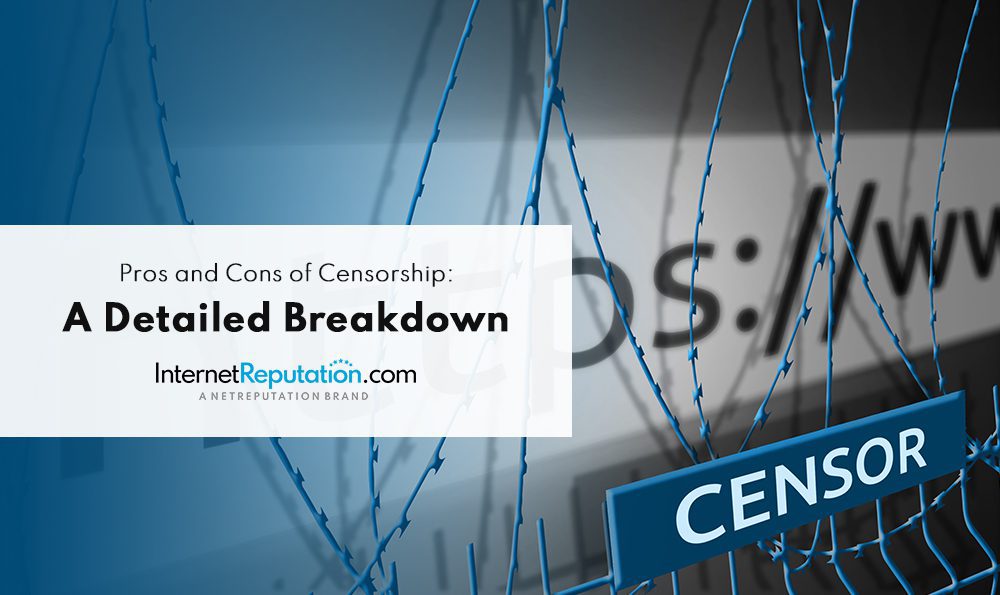

Censorship has been a contentious issue throughout history, with various forms impacting societies worldwide. The practice has sparked debates on its merits and drawbacks, ranging from political censorship to self-censorship. Although it can protect national security and maintain social order, censorship also raises concerns about freedom of speech and access to information.
Key Takeaways:
- Censorship has been used throughout history to control information and maintain social order, but it can also infringe on freedom of speech and limit access to information.
- While censorship can be argued as necessary for protecting national security and children from harmful content, it can also be used for propaganda and political control.
What Is Censorship?
Censorship, the control of information and ideas by authorities, has evolved over time for social, political, and moral reasons. Historically, it has maintained power structures, preserved cultural norms, and protected national security. From ancient to modern times, rulers and authorities restricted free expression to manage public perception and uphold societal values. Major events such as the Enlightenment period and the rise of totalitarian regimes have shaped censorship practices. Technological advancements, such as the internet, now offer new methods of control and surveillance. Understanding these dynamics is crucial to navigating the complexities of censorship today.
Types of Censorship
Censorship appears in various forms, including political censorship laws imposed by governments, religious censorship dictated by faith doctrines, corporate censorship driven by profit motives, and self-censorship practiced by individuals.
1. Political Censorship
Political censorship involves governmental authorities suppressing information or expression to control public discourse and protect political interests.
By restricting access to certain content, governments shape public opinion and limit the spread of dissenting viewpoints. Authorities can advance their agendas, manipulate public perception, and maintain power by controlling the flow of information. For example, propaganda plays a crucial role in political censorship, as governments often use biased or misleading information to sway public opinion.
Case studies worldwide showcase diverse strategies authorities employ to silence dissent and stifle opposition. Examining these mechanisms provides valuable insights into the dynamics of censorship and its societal impact.
2. Religious Censorship
Religious censorship restricts content that contradicts religion or challenges established beliefs, doctrines, or practices of religious institutions.
Its aim is to safeguard traditional values and teachings upheld by a particular faith by controlling the flow of information. Throughout history, religious authorities imposed strict regulations on publications, artworks, websites, and public speeches to prevent spreading heretical or sacrilegious ideas. From the Catholic Church’s banning of certain texts during the Inquisition to suppressing critical interpretations of Islamic scripture, examples of religious censorship abound.
The rationale often stems from a desire to maintain orthodoxy and unity within a religious community. Religious leaders seek to avoid internal divisions and preserve doctrinal purity by silencing dissenting voices and alternative viewpoints. The impact of these measures on intellectual freedom, expression, and the progress of knowledge remains a subject of ongoing debate.
3. Corporate Censorship
Corporate censorship occurs when private entities restrict or modify content to align with their business interests, marketing strategies, or stakeholder preferences.
Profit-driven decisions play a significant role in shaping internet content restrictions. Companies often prioritize safeguarding revenue streams and maintaining favorable relationships with advertisers, leading them to suppress or alter information that could harm financial interests.
This phenomenon is prevalent in media and digital platforms, where monetization dictates content dissemination. Analyzing corporate censorship case studies, such as social media platforms that use content moderation and advanced algorithms, reveals how AI can improve moderation accuracy, even as financial considerations often override principles of unrestricted information dissemination. In practice, social media companies rely on social media moderators to enforce community standards for users. Debates over social media censorship often highlight high-profile cases such as Twitter’s ban of Donald Trump’s account in January 2021. A broader example is China, which censors social media platforms such as Facebook and Twitter.
4. Self-Censorship
Self-censorship refers to individuals suppressing their thoughts, opinions, or expressions to conform to social norms, avoid backlash, or protect personal interests.
This behavior often arises from fear of judgment, sanctions, or consequences for expressing dissenting or controversial views, creating a chilling effect that discourages people from discussing or viewing specific content. Societal pressure to adhere to commonly accepted beliefs or ideologies also drives self-censorship.
It is important to recognize that self-censorship not only silences voices but also suppresses creativity, diversity of thought, and open exchange of ideas. This shift moves people from active participation toward passive consumption of information.
Pros of Censorship
Censorship can positively impact national security, social order, and protect vulnerable populations such as children from harmful content.
When balancing public safety against personal liberty, censorship serves legitimate protective purposes. This double-edged sword explains why the issue remains contested. When implemented effectively, censorship regulates information dissemination within society. Filtering out potentially harmful or misleading content helps governments curb misinformation and prevent dangerous falsehoods that may incite violence or conflict, especially in matters of public health and safety. The challenge lies in avoiding overreach.
Censorship promotes cohesion by ensuring that citizens encounter content that aligns with societal values and norms. It also shields marginalized groups and individuals, such as victims of cyberbullying or harassment, by removing harmful online materials. Ultimately, censorship contributes to building safer, more inclusive communities.
1. Protecting National Security
A primary advantage of censorship is preventing the dissemination of sensitive information that may threaten national security or public safety, including leaks of military secrets.
Government censorship protects classified data and thwarts threats from external entities seeking strategic insights by controlling what information reaches the public domain.
Security measures such as redacting confidential materials or restricting access to certain government information channels are vital to national defense. Balancing secrecy with transparency in governance is complex; the challenge is preventing secrecy from becoming abuse.
2. Maintaining Social Order
Censorship helps preserve social harmony and stability by regulating content that could incite unrest, violence, or disruptive behavior.
It aims to prevent misinformation, hate speech, and war propaganda, which fuel tensions and exacerbate conflicts, by controlling the dissemination of sensitive information. Censorship also maintains order and civility by filtering content in line with societal norms and protecting individuals from harmful influences.
Upholding cultural norms through censorship ensures society’s values and ethics are respected, fostering a cohesive community where diverse perspectives coexist peacefully. Thus, censorship shapes public discourse and safeguards collective well-being.
3. Protecting Children from Harmful Content
Censorship prevents minors from seeing graphic violence and explicit material, enhancing online safety and shielding vulnerable populations from dangerous digital content.
Protecting children from harmful content nurtures a healthy mindset and shapes respectable values early on. Unsuitable material can profoundly impact children’s mental health and behavior, influencing their worldview and interactions. Creating a safe online space through content filtering allows parents, guardians, and platforms to safeguard children’s innocence. Age-based rules protect children and may restrict websites or material related to illegal content and activities, such as drugs or weapons, reducing access. Balancing protection and freedom of information poses complex ethical challenges in the digital era.
Cons of Censorship
Despite its benefits, censorship raises concerns because it restricts individual freedoms and open discourse, infringes on freedom of speech, limits access to diverse information, and can stifle creativity and critical thinking.
Suppressing certain ideas or opinions hinders intellectual growth. Heavy censorship encourages social conformity and breeds distrust, especially when reducing transparency and weakening institutional confidence. Limiting freedom and information flow deprives people of the opportunity to engage with diverse perspectives, challenge viewpoints, and support informed research. This restriction inhibits personal development and stifles the exchange of ideas essential for societal progress.
1. Infringes on Freedom of Speech
A primary criticism is censorship’s suppression of speech and public communication, curtailing individuals’ rights to express opinions, challenge authority, and engage in open dialogue. This impedes democratic idea exchange.
Restricted speech silences dissent, hindering diverse perspectives vital for a vibrant society. Suppressing dissent leads to dominant narratives that stifle critical thinking and innovation, despite the essential role of free idea exchange in democracy. Censorship can also silence marginalized voices.
It creates echo chambers and polarization on digital and social media platforms, allowing only certain viewpoints. This narrows public discourse and limits constructive debates and intellectual growth. Ethical dilemmas arise when deciding which narratives are acceptable, potentially leading to biases influencing public access and discussion.
2. Limits Access to Information
Censorship restricts access to a wide range of information, impeding informed decisions, critical thinking, and full democratic participation.
Without diverse perspectives and alternative viewpoints, understanding complex issues skews, leading to uninformed opinions and stilted discussions.
Moreover, censorship hampers creativity and intellectual growth by stifling innovation and limiting exposure to new ideas and advancements.
In societies where information is vetted or suppressed, knowledge dissemination suffers, resulting in fragmented public awareness.
3. Can Be Used as a Tool for Propaganda
Censorship used as propaganda manipulates narratives, distorts the truth, and controls public perception, influencing beliefs through selective exposure to information.
Selective content filtration pushes certain agendas, shaping public opinions and worldviews. Censorship conceals vital information that challenges the status quo or threatens power holders. Distorted facts hinder critical thinking and suppress dissent, fostering misinformation. It also suppresses innovation and artistic growth by limiting creative expression. Censorship can shape a country’s or history’s course by molding collective memory and controlling mass narratives.
Conclusion: Is Censorship Necessary?
The debate over the necessity of internet censorship continues worldwide. Its future largely depends on how social media companies and platforms evolve their moderation rules. Proponents emphasize security and order, while critics stress free speech and access to information.
Supporters highlight censorship’s role in maintaining social stability and protecting individuals from harmful content like hate speech, violence, and misinformation. They argue censorship upholds public morality and national security. For example, during the pandemic, YouTube removed videos spreading COVID-19 misinformation to protect public health.
Opponents worry about censorship being used to silence dissent and control information flow, citing cases like Facebook’s 2018 Cambridge Analytica scandal, which raised concerns about platform power and privacy. The slippery slope remains central: the challenge is protecting safety without undermining freedom.