
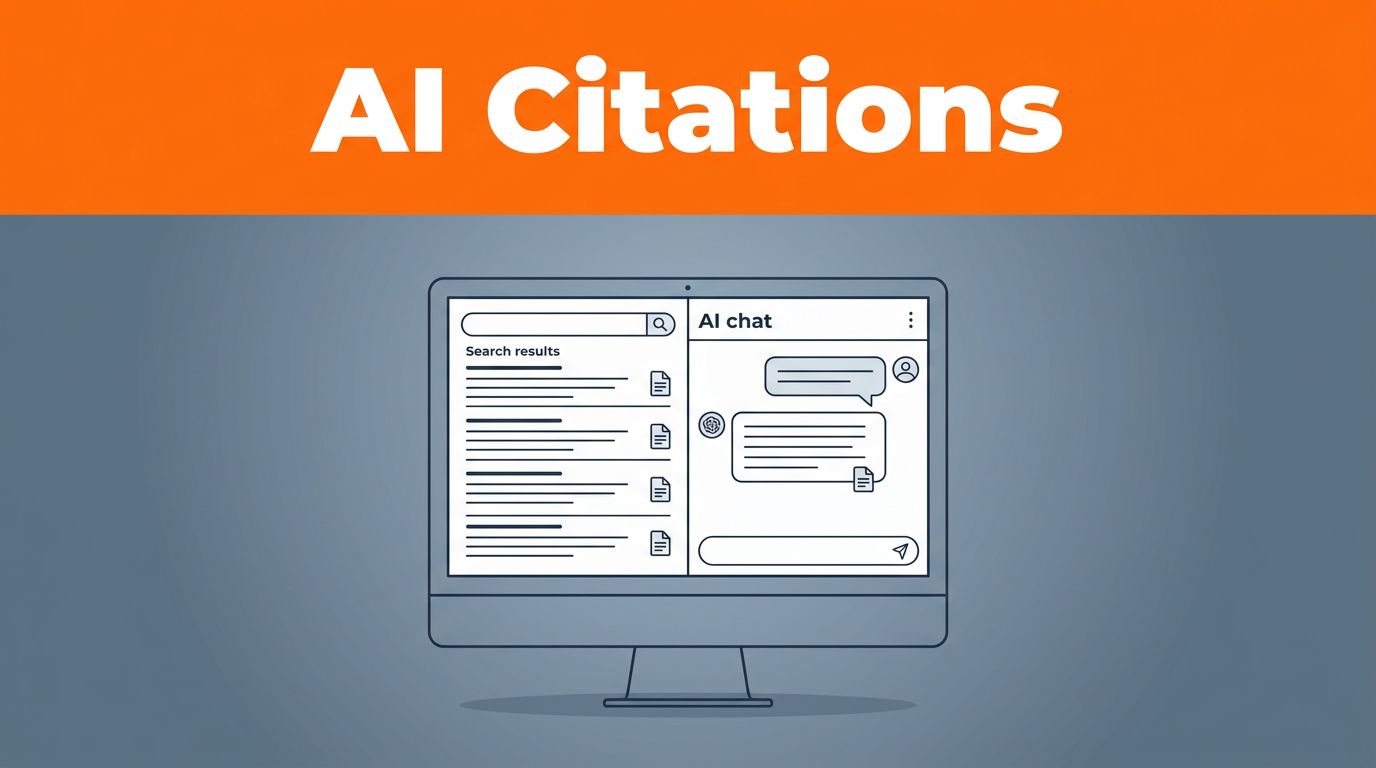

If you’re still judging search visibility by rankings alone, 2026 is going to feel confusing. AI Overviews citations and other AI answer citations are starting to behave like a different system, with different incentives.
Here’s the practical problem: your page can sit on page one, yet never get cited in an AI answer. Meanwhile, a page that ranks poorly (or doesn’t rank at all for that query) can show up as a “source” in the AI response that users trust most.
For business owners, doctors, lawyers, CEOs, and public figures, this isn’t just an SEO story. It’s a reputation story. AI answers are becoming a first impression, which makes reputation management and measurement more important than ever.
What’s confirmed in 2026: citations are separating from classic rankings
Recent reporting and datasets point in the same direction: AI citations are not simply “the top 10, remixed.”
An SEO Pulse recap highlighted updated analysis showing a sharp drop in overlap between Google’s top rankings and AI citations, meaning top 10 rankings are no longer a strong predictor of being cited (SEO Pulse coverage). Separately, Moz published research on AI Mode showing extremely low overlap between citations and the URLs in the organic SERP for the same query (Moz AI Mode citation study).
On the Bing side, the rule change is even more concrete because Microsoft now reports citations directly. In February 2026, Microsoft introduced AI Performance in Bing Webmaster Tools (public preview), giving publishers visibility into how often their pages are cited across Copilot, Bing AI summaries, and select partner integrations (Microsoft announcement). Search Engine Land also covered the rollout and described the core metrics that appear in the report (Search Engine Land coverage).
The key confirmed shift: AI citation visibility is becoming its own metric, separate from rankings, clicks, and even impressions.
Why AI Overviews citations don’t map cleanly to rankings (facts vs. hypotheses)
Some parts of this are well supported, while others are still educated inference.
Confirmed, from official guidance and product behavior
Google’s public position stays consistent: focus on helpful, original content that serves users, and strong technical accessibility. Google has also published documentation for how AI features relate to your website presence (Google Search Central documentation) and guidance on succeeding in AI search experiences (Google Search Central blog post).
Microsoft’s AI Performance reporting confirms something else that matters: Bing can cite content in AI answers without that same content “winning” the classic SERP. The presence of a dedicated AI citation report makes the separation official, even if the underlying selection systems overlap with search infrastructure.
Informed hypotheses (likely, but not fully transparent)
Citation selection behaves more like “best supporting evidence” than “best ranked result.” Based on observed patterns across many industries, AI systems appear to reward:
- Directness and extractability: clear headings, tight definitions, and sections that answer a sub-question cleanly.
- Entity confidence: the system seems to prefer sources that match known entities (people, organizations, conditions, locations) and consistent facts across the web.
- Freshness and maintenance: updated pages and current context can beat older “strong rankers.”
- Format diversity: some queries favor videos, forums, or reference-style pages, even when those aren’t top-ranked in blue links.
This helps explain why AI Overviews citations can surface “supporting” sources that don’t look like SEO winners.
How to monitor AI citations vs. rankings (and report it without noise)
If you treat AI citations like rankings, your reporting will lie to you. Instead, split measurement into two tracks: “classic search performance” and “AI answer visibility.”
Start with these practical checkpoints:
- Google Search Console (GSC): keep tracking clicks, impressions, and query demand, but annotate when AI features expand for your query set. GSC won’t directly label all AI citations, so use it for baseline demand and trend breaks.
- Bing Webmaster Tools: turn on the new AI Performance report and export page-level citation trends. Microsoft is effectively giving you a new visibility layer (Microsoft’s AI Performance announcement).
- Server logs: look for spikes in Bingbot and Googlebot activity on pages that begin getting cited. Pair this with content update timestamps to spot cause and effect.
- SERP tracking: keep rank tracking, but add a parallel “AI presence” note (AIO shown, cited domains, citation count). You don’t need perfection, you need consistency.
If you manage a brand’s public perception, connect this to your monitoring cadence. A strong online reputation management program already watches brand mentions and review sentiment. Extend that same discipline to AI answer mentions with online reputation monitoring strategies.
Here’s a compact way to explain the difference to stakeholders:
| Area | Organic ranking factors (classic SEO) | AI answer, citation selection signals (observed, likely) |
|---|---|---|
| Core goal | Rank a page for a query | Support an answer with credible sources |
| Primary inputs | Links, content relevance, technical SEO, intent match | Extractable passages, consistency across sources, entity trust, topical fit |
| Freshness | Matters for some topics | Often matters more, especially for fast-changing queries |
| Page structure | Helpful, but not mandatory | Frequently decisive (headings, summaries, clear sections) |
| Authority | Domain and page authority strongly correlate | Authority helps, but “useful evidence” can beat raw authority |
| Outcome metric | Rank, clicks, traffic | Citation frequency, presence, and sometimes link clicks |
What to change on your site to earn citations (and protect brand trust)
Chasing “AI hacks” usually backfires. Instead, make your pages easier to trust and easier to quote.
On-page moves that tend to help citation selection
Write sections that sound like they can be cited. That means short definitions, clear steps, and plain-language answers. Add a brief “What this means for you” paragraph for high-stakes topics like medical, legal, or financial decisions.
Also, tighten credibility signals:
- Name real authors and reviewers when appropriate (especially in YMYL categories).
- Add dates and maintain “last updated” accuracy.
- Cite primary sources where possible, not just opinions.
Off-page moves that improve “entity trust”
This is where reputations are built. Consistent brand mentions across authoritative sites can act like corroboration. For executives, doctors, attorneys, and public figures, that overlaps heavily with online reputation repair fundamentals.
If negative results or outdated profiles dominate page one, citations can still spotlight the wrong narrative. That’s why many clients involve a reputation management company or one of several online reputation management companies to align search results, knowledge panels, reviews, and authoritative profiles.
When the situation is urgent, a Reputation Repair Company may focus on suppression strategy, removals where possible, and publishing credible content that can earn both rankings and AI citations. If you’re rebuilding trust after a hit piece or a viral complaint, pair content fixes with a step-by-step reputation repair guide.
In higher-risk cases, an Online Reputation Expert can also help set expectations: AI citations may rise before rankings do, or vice versa. That’s normal now. Your reporting has to reflect that reality, especially when you’re selling professional services like Reputation Repair Services.
Conclusion: treat citations as visibility, not validation
AI answers are turning citations into a new kind of shelf space. Rankings still matter, but they no longer explain the whole story.
The teams that win in 2026 will track AI Overviews citations separately, improve content that’s easy to quote, and connect AI visibility to real business outcomes. If your name or brand is part of the product, invest in reputation management and measurement that matches how search works today.