
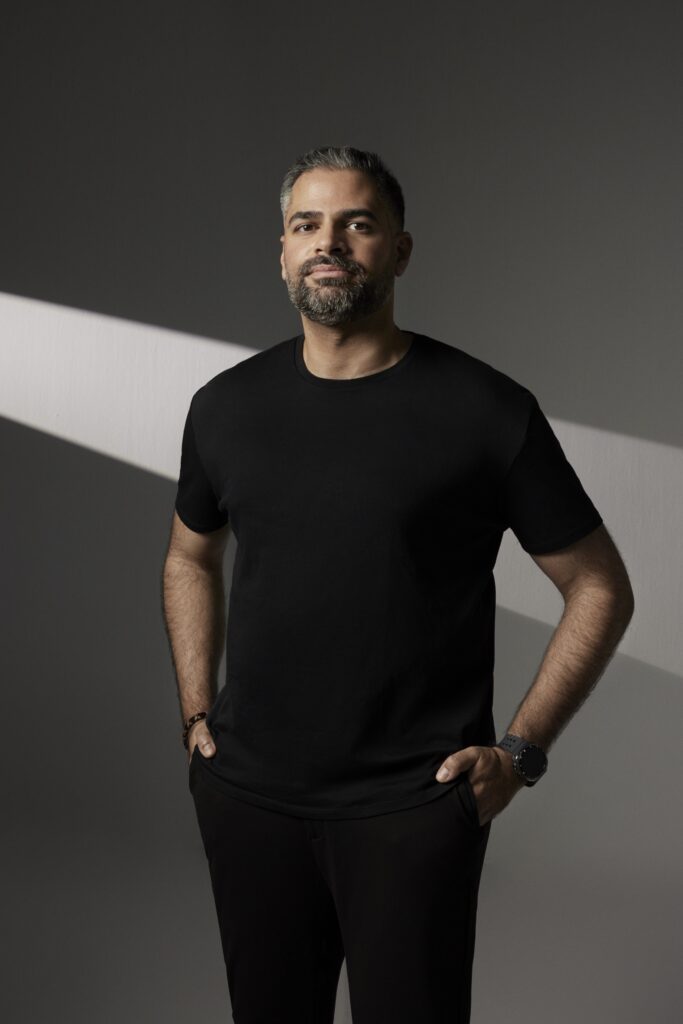

By Riaz Naqvi, Director of Content at Prestidge Group
In the digital arena, the fault warnings have escalated. In the boardroom, leaders have no idea their reputation is stalling. The algorithms now notice that the narrative is rolling sharply out of control.
With terrifying speed, a single misinterpreted post or a silent LinkedIn profile can re-enact the final moments of a CEO’s perceived authority before it fatally crashes into the sea of irrelevance.
In 2026, professional “crashes” – either via reputational obsolescence or a sudden crisis of credibility – are arguably more common than they were a decade ago. Look at the global impact of releasing a tranche of Epstein files as a prime example. While tools for communication are more accessible than ever, the search for authentic influence brings fear, recriminations, and a desperate quest for answers.
The people responsible for finding these answers face several hurdles. It could be the complexity of (mis)information in an Al-driven environment. It could also be fevered social media speculation, which spreads potentially harmful or inaccurate takes on a leader’s vision.
But what drives the people seeking to master this matrix?
Anatomy of the Invisible Lead: Mastering Executive Branding and AI-driven Content
Growing up in the industry during the shift from traditional newsrooms to digital-first strategy, two major things were going on. One was the total democratization of media, and the other was the rise of the ‘Executive-as-an-Algorithm’. The CEinfluencer, or Boss Brand (not that one).
As the legendary management consultant Peter Drucker once noted, “The most important thing in communication is hearing what isn’t said.”
In 2026, what isn’t said on an executive’s social profile speaks volumes. At our agency, we look at the three major steps of a personal brand audit: collecting narrative data, analyzing sentiment, and sharing the results through high-impact thought leadership.
For major reputation building, which involves global leaders with stakeholders watching from all over the world, you have to ensure each piece resonates with its target audience. Is the executive a Big Four consultant involved in the Middle Eastern transportation sector? A deep dive into the Saudi e-mobility sector could be ideal for him. Maybe she’s a New York-based tech maven developing tomorrow’s productivity SaaS? Try an agentic AI explainer video.The point is that audiences, and their needs, vary. Bridging the gap between what they care about and what a high-profile executive wants to speak about is the secret sauce – our own 11 secret herbs and spices.
Climbing the Summit of Credibility: Integrating Social Media Strategy and PR Wins
Many leaders recall the day that changed everything. The Eureka moment when they realized a “press release” was no longer enough to sustain a brand.
I loved the challenge of being an editor, having to step outside of yourself and take in a different perspective to solve a problem. In a career spanning the editorial desks of Khaleej Times, the Hackney Citizen, Gulf News, and Arabian Business to the halls of a Big Four consultancy via three years at one of the world’s leading strategic comms agencies, I’ve observed content trends shifting in tandem with client expectations.
The unique circumstances of 2026 present an unusual set of difficulties. We don’t have any particularly low-tech methods left to reach the summit of public trust. You are either at the top of the search results… or buried under 30 to 40 feet (or search pages) of digital noise.
Winston Churchill: “A lie gets halfway around the world before the truth has a chance to get its pants on.”
Slim Charles: “If it’s a lie, then we fight on that lie. But we gotta fight.”
Both quotes are, for different reasons, incredibly affecting in 2026. The former speaks to the speed of fake news dissemination, while the latter serves as a poignant commentary on the need to ‘dig your heels in’ on a particular issue. We see this in botched crisis comms management all the time, when a brand tries to correct an evolving situation by building a strategy on a house of cards.
Circling back to our aviation metaphor, in the age of social-first PR, the black box of a personal brand – the ‘cockpit voice recorder’ of your public appearances and the flight data of your social engagement – contains hundreds of times more information than it did when our agency began looking into this a decade ago.
The Human Factor: The Future of C-Suite Digital Reputation and AuthorityWhile technology like AI-driven content has helped make the process of content creation easier, one factor remains constant: the human.
Every professional identity, whether start-up founder or C-Suite veteran, is unique because the circumstances are not standard. You can’t put a generic content strategy into a specific type of personal brand. You have to look at the individual, the industry, and the vision in the situation.
Could we ever live in a crisis-free world? As long as humans are driving the industry, the risk of a “reputational stall” is always a possibility.
It’s not necessarily a failure of tech. Humans have designed the strategy, built the messaging, and scheduled the posts.
You can standardize an algorithm. You can’t standardize a human.
At least not yet.
A comms and editorial strategist with 15 years of newsroom, agency, and in-house corporate experience, Riaz oversees editorial content and PR as part of the leadership team at Prestidge Group. Having honed his editorial skills at tier-1 titles including Khaleej Times, Gulf News, Arabian Business, and CEO Middle East, he brings strategic clarity to complex topics. He has helped lead analytical thought leadership at PwC Middle East and has worked with clients such as Visa, Ford, Disney, and ADNOC at Burson. Riaz has also moderated panels for STEP and Fast Company ME to shape engaging, insightful discussions on- and off-stage.