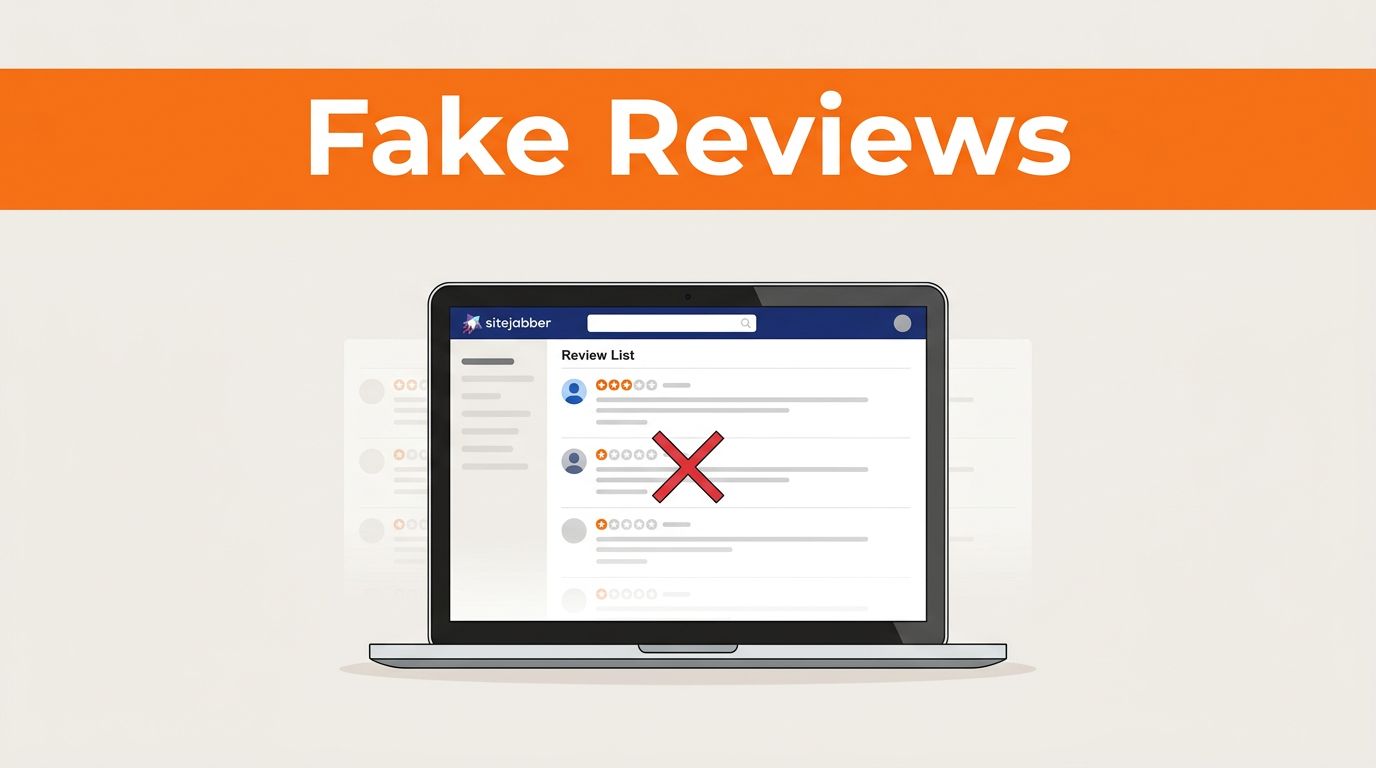

Trying to remove fake Sitejabber reviews can feel like arguing with a ghost. The review hurts, the facts look wrong, and the platform may not spell out every step in one place.
Here’s the bottom line. You can only get a review removed if it breaks Sitejabber’s rules or terms, not because it’s harsh, unfair, or bad for conversions. As of March 2026, Sitejabber’s public pages focus more on review guidelines, the review approval process, and its terms of service than on a detailed business-side removal workflow, so your best shot is a tight, evidence-led request.
What actually counts as a fake Sitejabber review
Not every negative review is fake. That’s the first mistake many brands make.
Under Sitejabber’s public guidelines, a genuine review should reflect firsthand experience, stay relevant, and avoid duplicate posting. The platform also says only one review per transaction is allowed, and second-hand stories should not be posted. That gives businesses a workable policy base.
A review may qualify for removal if it appears to be:
- posted by someone who was never a customer
- copied or duplicated across transactions
- based on hearsay, not firsthand use
- tied to incentives or manipulation
- impersonation, spam, or irrelevant commentary
Still, a one-star review does not become fake just because it sounds angry. If the person had a real transaction and shares an opinion, Sitejabber may leave it up, even if the wording feels unfair.
If a review is negative but rooted in a real experience, it’s a response issue, not a removal issue.
That distinction matters for reputation management and legal risk. If you overstate your claim, moderators may view later reports with more skepticism. In other words, policy fit comes first, emotion comes second.
Recent public reporting on the FTC’s action involving Sitejabber’s handling of misleading review displays added pressure around authenticity, but it did not create a shortcut for businesses to wipe out criticism. See this FTC action summary for context. For practical recovery beyond takedowns, a broader online reputation repair guide helps when a review stays live.
Flagging, reporting, disputing, and requesting removal are not the same
Sitejabber does not publicly define all four terms in one clear help article. So, for business use, treat them as working categories.
This quick table keeps the language straight:
| Action | What it means in practice | Best use |
| | | |
| Flagging | Using an on-page signal to alert moderation | Fast first step when a review looks suspicious |
| Reporting | Sending a fuller submission with facts and attachments | When you can point to a rule violation |
| Disputing | Challenging the review’s legitimacy as the business named | When you have transaction records or proof of mismatch |
| Requesting removal | Asking Sitejabber to delete content because it violates policy or terms | Only after you match the review to a rule |
Here’s the trap. Many teams “flag” a review and assume they’ve made a legal dispute. They haven’t. A flag is usually a signal, not a case file.
Likewise, “disputing” is not the same as “I disagree.” A real dispute ties the review to a published rule. For example, you might show there was no customer account, no order number, no service date, and no matching support ticket.
Meanwhile, a removal request should be narrow and clean. Don’t argue that the review is “damaging.” Argue that it is duplicative, non-customer, hearsay, or otherwise outside the review guidelines.
A policy-safe process to remove fake Sitejabber reviews
When the review is truly fake, move like an auditor, not a marketer.
- Capture the evidence first: Save screenshots, review URL, timestamps, reviewer name, and any profile details. Keep a dated record in case the post changes.
- Match the problem to a rule: Point to the exact issue, such as no firsthand experience, duplicate review, or no matching transaction. Don’t send a vague complaint.
- Gather proof that supports your claim: Useful examples include order logs, CRM records, invoices, appointment books, refund history, support tickets, or proof the same user posted duplicate claims. Redact private data before sharing.
- Use the on-platform option available: If a flag or report button appears, use it. Keep the text short. One clear paragraph beats five emotional ones.
- Submit a formal dispute or removal request: Explain the policy basis, attach your evidence, and state the outcome you want. Ask for review under the guideline violated, not a favor.
- Prepare a public response if needed: If the review stays up, post a calm reply that protects privacy. A good response can limit damage while your case is pending.
A realistic request might say that the reviewer cannot be matched to any transaction, the review appears to repeat another post, and the content fails the platform’s firsthand experience rule. That’s much stronger than “This is false and hurting our brand.”
This is where online reputation management overlaps with compliance. If you hire a reputation management company, ask for the exact policy language they plan to cite. The better online reputation management companies document every step, because weak reports can backfire.
The mistakes that ruin valid Sitejabber complaints
The biggest error is simple, calling every bad review fake. Moderators see that all day.
Another common mistake is mass-flagging. Don’t ask staff, friends, or customers to pile on. That can look manipulative. Also avoid review gating, incentive offers, or pressure campaigns. Sitejabber’s public materials and current FTC pressure around truthful reviews make those tactics a bad bet.
Legal threats can also hurt your position when the issue is really evidence, not defamation. Keep the tone factual. Stick to what you can prove. Protect customer data at all times.
If the problem spreads across search results, review sites, and social media, you may need online reputation repair, not just one removal request. In that case, use a guide to choose the right reputation management company and avoid anyone promising guaranteed deletion. A real Online Reputation Expert or Reputation Repair Company won’t tell you to fake consensus. Strong Reputation Repair Services start with policy, proof, and clean public responses.
Use this short checklist before you submit:
- Policy match: Can you name the rule violated?
- Evidence file: Do you have screenshots and business records?
- Privacy check: Did you redact customer data?
- Tone check: Is your request calm and brief?
- Backup plan: Do you have a public response ready?
Removing a fake review on Sitejabber is less about force and more about fit. Match the facts to the rule, keep your evidence tight, and avoid shortcuts that create bigger problems. When a review can’t come down, smart reputation management means responding well, documenting the record, and rebuilding trust the right way.