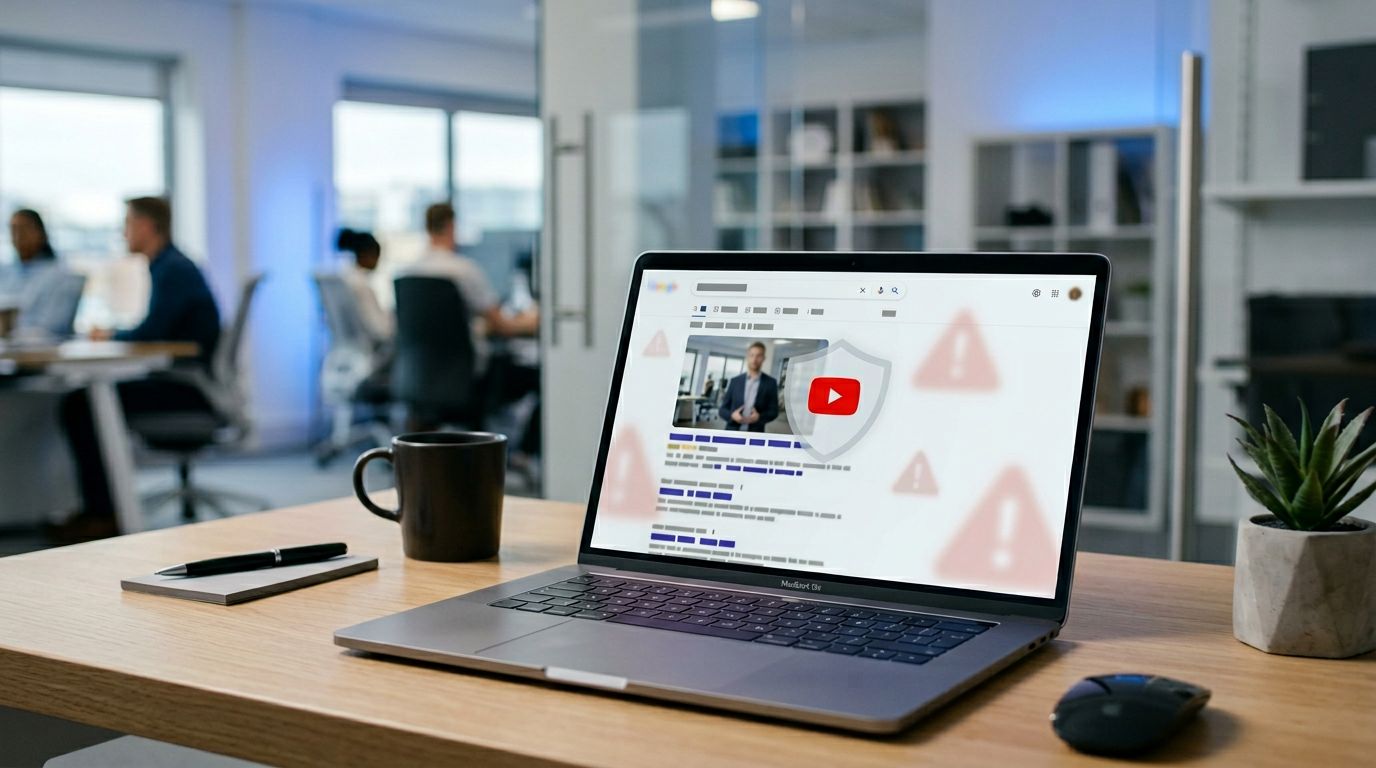

Seeing a negative YouTube video show up on page one of Google can feel like a billboard you didn’t buy. A competitor smear video, an ex-employee rant, a customer complaint, or even an old news clip can sit right under your brand name and quietly drain trust.
YouTube reputation repair is possible, but it works best when you separate two problems: what happens on YouTube, and what happens on Google. Removal isn’t always available, and suppression takes time. Still, there’s a clean, ethical playbook that protects your name and keeps you in control.
Why negative YouTube videos rank so fast (and what to check first)
Google often treats YouTube as a “trusted” source, so videos can jump into top results quickly, especially for name searches. This is common for doctors, lawyers, CEOs, founders, and public figures because searchers want fast context, and video looks like proof.
Start with a quick triage before you react publicly:
- Search your name and brand in an incognito window, then repeat on mobile.
- Note which query triggers the video (your name, your company, “scam,” “lawsuit,” “reviews,” “complaint”).
- Check if the result is a video carousel, a “Top stories” pack, or a normal blue link.
- Open the video and capture the basics: channel name, upload date, views, and the claims made.
Many negative videos rank because they match search intent better than your own assets. If you have thin “About” pages, no strong bio pages, or no authoritative video content, Google fills the gap with whatever exists.
For context on why YouTube content performs well in search, see Search Engine Land’s guide to YouTube for SEO.
Document first, respond second. A rushed reply can become a screenshot that outlives the video.
YouTube-side actions: report, restrict, and request removal the right way
YouTube is where you can sometimes remove or limit the video itself. Google is not your first stop if the content still lives on YouTube.
Here are the most common policy paths:
- Harassment and cyberbullying: attacks, threats, targeted harassment, or repeated abuse. Reference YouTube’s harassment policies.
- Privacy violations (doxxing): private info like home address, phone, medical data, or IDs.
- Impersonation: fake channels or misleading identity claims.
- Copyright (DMCA): if the video uses your protected footage, photos, or audio without permission.
- Other enforcement routes: reporting workflows live in YouTube’s reporting and enforcement hub.
If the video targets you with harassment, the nonprofit Right To Be has a practical YouTube safety guide that explains reporting and documentation in plain language.
Takedown and request checklist (copy and use)
Use this checklist for a YouTube report, a creator outreach message, or counsel review:
- Video URL and channel URL
- Timestamps for each harmful statement (for example, 0:42 to 1:10)
- Screenshots of the title, description, thumbnails, and key frames
- Exact quotes of claims that are false, threatening, or privacy-invasive
- Why it violates policy, matched to a YouTube category (harassment, privacy, impersonation, copyright)
- Proof packet (contracts, invoices, court filings, medical board record, employment separation letter, official statements)
- Impact notes (lost deal, patient complaint, referral drop, media inquiry), keep it factual
- Your requested outcome (removal, blur/redaction, age-restriction, comments disabled, channel action)
A reputation management company can also help you choose the cleanest path, especially when claims overlap policy and legal issues. If removal is a viable route, see Reputation Rhino’s YouTube video removal services.
When to involve legal counsel (concise triggers)
Bring in counsel early if any of these are true:
- The video includes defamation tied to provable facts (not just opinions).
- The creator demands money or makes threats.
- The claims involve regulated fields (medical care, malpractice, criminal allegations).
- You need a formal preservation letter or court-backed action.
Legal review can also prevent a backfire. A sloppy threat can become “content” for the next upload.
Google-side actions: what you can (and can’t) change in search results
Google generally doesn’t remove results because they’re unfair or negative. If the video stays on YouTube and follows policy, Google may still rank it. That’s why online reputation management for video problems usually combines two tracks: removal attempts on YouTube, and suppression through stronger assets.
Here’s what can move the needle on Google:
- If YouTube removes the video, Google typically drops the result after recrawl.
- If the video becomes private, it often stops ranking because it’s not publicly accessible.
- If the video remains public, your best option is to publish content that deserves to outrank it.
This is where reputation management becomes more like real-world PR. You don’t erase the rumor; you make it less credible, less visible, and less dominant.
A practical suppression strategy includes:
- A robust bio page (person) or “About” and “Press” pages (business).
- High-authority profiles (professional associations, verified social profiles).
- Thoughtful YouTube content you control, optimized for your name and services.
- Press and third-party coverage that’s factual and current.
If you need a structured approach to pushing harmful results down, use this push down negative Google results plan.
Outreach email template (to the uploader or channel owner)
Subject: Request to correct or remove inaccurate video about [Name/Business]
Hi [Name],
I’m reaching out about your video titled “[Video Title]” posted on [Date]. It appears here: [paste the video URL].
Several statements in the video are inaccurate, especially at [timestamps]. For example, the claim that “[quote]” is false because [one short fact]. I can share supporting documentation, including [1 to 2 items].
Would you be willing to (1) remove the video, or (2) edit the video and description to correct the specific claims? If you prefer, I can send a concise list of corrections with sources.
Thanks,
[Full Name]
[Role, Company]
[Best contact info]
Keep it calm. Don’t debate in comments. Also, don’t offer payments for removal. That can escalate the situation and create a paper trail you don’t want.
A 30/60/90-day mitigation plan for YouTube reputation repair
Reputation recovery is a campaign, not a single report form. This 30/60/90 plan supports both online reputation repair and long-term defense.
A simple timeline helps you assign owners and measure progress:
| Timeframe | YouTube-side actions | Google-side actions | Output to track |
|---|---|---|---|
| Days 1 to 7 | Evidence capture, policy mapping, reports filed | SERP audit, query list, “page one” screenshot log | Case file with URLs, timestamps, screenshots |
| Days 8 to 30 | Creator outreach, DMCA/privacy steps if applicable | Publish or upgrade bio/About/Press pages | 2 to 4 new or improved owned pages |
| Days 31 to 60 | Publish response video if appropriate (factual, short) | Build supporting profiles, secure credible mentions | 3 to 6 assets that can rank |
| Days 61 to 90 | Continue reporting if new violations appear | Release additional videos that match search intent | Page one composition improvement |
During this window, many teams bring in an Online Reputation Expert or Reputation Repair Company to coordinate content, PR, and escalation. The right partner acts like a project manager plus strategist. If you’re comparing online reputation management companies, ask how they handle YouTube policy workflows, documentation, and content suppression without sketchy tactics.
For a broader roadmap that ties video issues into your full Reputation Repair Services plan, use this step-by-step online reputation repair guide.
Conclusion
Negative videos that rank on Google can feel personal, but you can respond with discipline. Focus first on YouTube policy options, then strengthen what Google should rank instead. Keep your evidence tight, your outreach calm, and your content consistent. With steady online reputation management, the story people see first won’t be the loudest one, it’ll be the most credible.