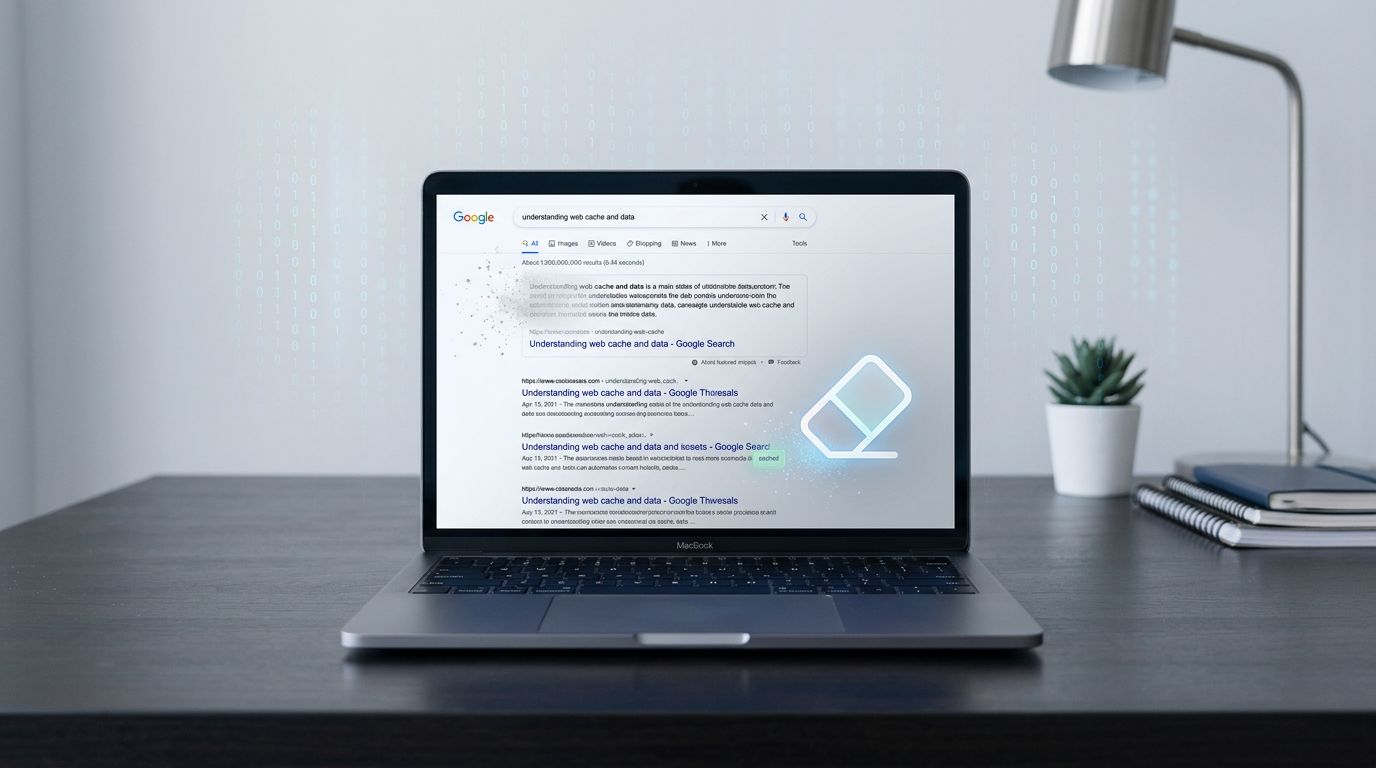

You updated a page, removed sensitive text, or deleted an old URL, yet Google still shows the old snippet. That mismatch can cost calls, patients, clients, and deals.
The fix usually isn’t “wait longer.” It’s a short, controlled sequence to remove Google cache signals (what Google last stored), refresh the snippet, and make sure your server response matches your intent.
Below is a practical plan for site owners, SEOs, and high-stakes professionals who need search results to reflect reality, not history.
Why Google still shows old snippets after you cleaned up a page
Google snippets come from more places than most people expect. The visible “description” might be pulled from on-page text, but it can also come from titles, structured data, or even external anchor text pointing at your page. That’s why a quick edit sometimes does nothing.
It also helps to separate three concepts:
- Indexing: whether Google keeps the URL as a result at all.
- Snippets: the title and description shown in results.
- Stored versions: what Google last crawled and used to build the snippet.
In March 2026, there’s still no button to “edit” a snippet directly. Instead, you either (1) change the underlying inputs or (2) ask Google to refresh what it shows, then wait for a recrawl.
If you don’t own the page (for example, a directory profile or old press page), Google’s official path is the Refresh Outdated Content tool. If you do own the page and it’s verified in Search Console, you’ll typically use the Removals tool plus URL Inspection (more on that below).
If your goal is deindexing, don’t block the URL with robots.txt. Google needs to crawl the page to see a 404/410 or a noindex. Blocking often freezes the old snippet in place.
Finally, keep expectations realistic. “Removals” requests are a speed boost, not a permanent rewrite of Google. The durable fix always comes from the server response and the page content that Google can recrawl.
A decision tree that starts with the status code (200/301/404/410)
Before touching Search Console, confirm what the URL returns to Google right now. Use a browser, curl, or a reliable HTTP checker. Then decide whether the page should exist.
Here’s the simplest decision framework to follow:
| Current status | Should the page exist? | Best practice | What to do next |
|---|---|---|---|
| 200 OK | Yes | Keep it live, update content | Update on-page text, titles, structured data, then request indexing |
| 301 Redirect | Usually no (old URL retired) | Redirect to the closest equivalent, keep canonicals consistent | Confirm redirect chain is clean, then request recrawl of old URL |
| 404 Not Found | No (or unknown) | Use for missing pages you might restore | Leave 404, then use Removals for speed if needed |
| 410 Gone | No, permanently | Best for permanent removals, faster “gone” signal | Return 410, then submit a temporary removal to clear lingering results faster |
A few high-impact examples:
- Sensitive old bio text on a “team” page: keep URL as 200, rewrite the paragraph, remove the sensitive lines, then request indexing. If the snippet still quotes the old line, use the “clear snippet” style request (temporary).
- Discontinued product page that should not return: use 410, not 200 with a thin message. Add a helpful alternative page elsewhere, but keep the removed URL itself “gone.”
- Merged services pages (two practice areas combined): 301 the weaker URL to the stronger one. Then make sure the destination page actually covers the same intent.
In Search Console, the Removals area (and its reporting) has been around for years, with the current UX built on the Removals report in Search Console. What matters in 2026 is the limitation: removals are temporary (often up to about six months). Permanent outcomes come from 404/410, redirects, and content changes.
Control what Google quotes: on-page text vs titles, structured data, and external anchors
Once the status code matches your intent, focus on where the snippet is coming from. Treat this like a diagnosis, not a guessing game.
If the snippet text is coming from on-page content
Rewrite the exact lines Google is quoting. Don’t just delete a sentence and leave a gap. Replace it with a clean, specific alternative. For example, update an old product description (“Now with 2-day shipping”) to current language, or remove an outdated credential from a doctor bio and replace it with the correct board certification.
Then go to Search Console:
- Use URL Inspection for the updated URL.
- Click Request indexing to speed up the recrawl.
If the title link is wrong
Update the
If structured data is influencing the snippet
If you use schema (Product, Organization, Article, FAQ), update the fields that might appear in search features. Then validate and request indexing. Structured data doesn’t always control the snippet, but it can reinforce outdated claims if you forget it during cleanup.
If the snippet is pulled from external anchor text
This one surprises people. Google may use phrasing from links pointing to you, especially if your page is thin or ambiguous. In that case:
- Strengthen the destination page copy so Google has better text to quote.
- Update internal links and anchor text on your own site.
- If a partner, directory, or old press page controls the anchor, ask them to update it.
For a deeper walkthrough of the “page is gone but Google still shows it” scenario, see this guide to removing outdated Google results.
To speed up snippet changes on your own site, you can also use Search Console’s Removals options to temporarily remove the URL, or clear the outdated snippet until Google recrawls. That workflow often matters in reputation management, where old wording can cause real damage even if you fixed the page today.
If you’re building a broader online reputation management system (not just a one-off cleanup), start with what online reputation management means.
Don’t forget non-Google caches, then lock in a repeatable workflow
Google isn’t the only place that “remembers.” If you serve pages through a CDN (Cloudflare, Fastly, Akamai), purge the CDN cache for the exact URL after you remove sensitive content. Otherwise, Google can recrawl and still see the old HTML.
Also check:
- Your CMS object cache (if applicable)
- Server-side page cache plugins
- Social share previews (they have their own caches)
This is where online reputation repair becomes more than SEO. It’s coordination: web, legal, PR, and technical steps moving in the same direction. Many clients prefer a reputation management company because the stakes are high and the process is easy to mis-sequence. The market is crowded, so use a buyer’s filter if you’re comparing online reputation management companies. This guide helps: choose the right online reputation management company.
If you want a structured operating plan, use the 2026 online reputation management plan as a baseline, then add the cache and snippet steps below.
Quick cleanup checklist (use this every time)
- Confirm the URL returns the right status (200/301/404/410) and stays consistent.
- If permanently removed, prefer 410 over 404 when you’re sure.
- Don’t block the URL in robots.txt if you need deindexing.
- Align canonical tags, redirects, and sitemap entries (no mixed signals).
- Update the real snippet inputs: on-page text, title, headings, and structured data.
- Purge CDN and site caches after sensitive edits.
- In Search Console, run URL Inspection and Request indexing for updated 200 pages.
- Use Removals for temporary hiding or snippet clearing when timing matters.
- If you don’t control the page, use the Refresh Outdated Content tool.
- Re-check results over the next days and weeks, then repeat if Google still quotes old text.
Conclusion
Outdated snippets are like an old billboard you already replaced, yet drivers still describe the old one. To remove Google cache signals that keep old wording alive, start with the correct status code, fix the real snippet source, then use Search Console tools as a temporary accelerator.
When the stakes are personal or financial, a Reputation Repair Company or an Online Reputation Expert can run this as part of ongoing Reputation Repair Services, so your search results stop reflecting yesterday’s mistakes and start reflecting today’s reality.