


17 Tips for Overcoming Career Setbacks and Staying Resilient
Career setbacks can shake even the most confident professionals, but effective resilience strategies can make all the difference. We asked industry experts to share how they stay resilient and maintain a positive attitude in the face of setbacks or rejections in their careers. Discover the coping mechanisms or mindset shifts they’ve found helpful. Based on psychology, business leadership, and personal development expertise, these techniques can help you bounce back stronger while maintaining perspective on what truly matters.
- Treat Setbacks as Information, Not Final Judgments
- Regulate, Reframe, Re-route After Every No
- Focus Only on What You Can Control
- Turn Failure Into Feedback You Can Use
- Redirect Challenges Into Meaningful Growth
- Transform Setbacks Into Stepping Stones
- Seek Feedback and Act on It
- Develop Action Plans After Disappointments
- Reframe Rejection as Data, Not Verdict
- Apply The Four Agreements to Professional Challenges
- View Setbacks as Feedback, Not Failures
- Embrace Rejection as Proof of Ambition
- Build a Support System for Tough Times
- Learn from Every No Toward Your Yes
- Aim for Daily Improvement, Not Perfection
- Faith Provides Identity Beyond Business Results
- Remember Life Beyond Work Matters Too
Treat Setbacks as Information, Not Final Judgments
Setbacks are not proof you’re failing — they’re proof you’re trying. I remind clients, and myself, that a rejection is rarely about your worth. It’s usually about timing, fit, or circumstances you can’t control. That shift matters. When you stop tying every outcome to your identity, you free yourself to keep moving.
Resilience isn’t about never feeling discouraged. It’s about not getting stuck there. I’ve found it helps to build small recovery rituals that reset my mindset when things don’t go my way. For me, that often looks like stepping back, naming the disappointment, and then asking, “What’s the next right step I can take?” That single question pulls you out of rumination and back into movement.
Another key shift is treating setbacks as information, not verdicts. Every rejection carries data. Maybe it’s feedback on how you present yourself, maybe it’s a signal that you’re misaligned with the environment, or maybe it’s simply a reminder that even the best leaders hear “no.” When you see it as data, you’re more likely to adjust than spiral.
Finally, resilience grows when you protect your perspective. Who you surround yourself with matters. People who remind you of your strengths and encourage your persistence can make the difference between giving up and pushing forward. Rejections lose their sting when you remember you’re building a body of work, not chasing one single moment of approval.
The truth is, every leader, entrepreneur, and executive has faced doors closing. What separates those who keep rising is the ability to turn “no” into fuel rather than a full stop. Resilience is built one choice at a time — to reflect, to reframe, and to keep showing up.
Regulate, Reframe, Re-route After Every No
Age is my edge: I’ve had enough launches, raised my hand for enough stages but heard “no, not this time” often enough — conference keynotes, corporate workshops, even podcast pitches. I think that rejection isn’t a character judgment anymore — it’s a sort.
I stay resilient with a simple sequence I use myself and teach clients: regulate, reframe, re-route.
First I downshift my nervous system (one minute of longer exhales and a five-minute walk) so I’m not negotiating while flooded. Then I write three facts and one hypothesis about the “no” — what exactly was declined, what timing or budget signals were present, what was praised, and what I’m guessing but can test. Finally, within 24 hours I make one clean next ask, either a lighter-lift format (from keynote to fireside Q&A), a later date, or a different buyer entirely, so momentum doesn’t die with the rejection.
For example, last spring I was turned down for a marquee wellness summit. I ran the sequence, learned they loved the topic but had no keynote slots and re-pitched a smaller “repair literacy” lab with measurable outcomes. They booked it, and that session led to three corporate invites.
So, my mindset at this age is simple: it’s not me vs. the gatekeeper — it’s this offer vs. this moment. Senior founders still get “no’s,” but we can metabolize them faster — body first, story next, action last.

Focus Only on What You Can Control
I think one of the best techniques for remaining resilient and optimistic is to only pay attention to the things I can influence and not get distracted by everything beyond my control.
For example, there was a small hiccup when we had some issues while we were launching a new product. There were some technical issues that caused delays and disappointed some of our customers. It would have been easy to be disheartened or frustrated with those issues. I told myself to keep focusing on things I could control and not get all worked up about the things I couldn’t control.
I concentrated on refining the internal processes we had in place to launch new products, which were our development degree of maturity and our quality assurance processes. This gave us the result of being able to identify the issues we saw during our launch and work through the testing, defect identification, and issue-lowering solutions faster than we ever had done before. I did not blame or make excuses against any accountability of my team. Instead, I focused my team on what action we needed to take to ensure we got the product back on track.
By focusing on the things we could control and not getting hung up on everything else, we regained the momentum we lost and ended up delivering a much better experience for our customers. I would say that mindset did allow us to come out of the process as a much stronger company.
The reality is, without fail, whatever you are doing in business, you will come up against challenges and headwinds. If you can only keep focused on the things you can influence, you are finding the solution and moving ahead, even when it might be challenging. I have found that mindset to serve me well in my professional career.

Turn Failure Into Feedback You Can Use
Resilience in a career doesn’t come from pretending setbacks don’t hurt. They do. What matters is how quickly you learn to reframe them.
When I face rejection, my first step is to separate my emotions from the information. I ask: What’s the lesson here? Was it a matter of timing, positioning, or simply not the right fit? That shift turns a “failure” into feedback I can actually use.
Another thing that helps is building a long-term lens. One rejection feels massive when you’re looking at the next week. But zoom out to the next 5 years, and you’ll see how small it actually is in the bigger picture. That perspective keeps me from overreacting.
I’ve also found routines matter more than motivation. Exercise, journaling, even a simple daily review of what went right, these anchor you when external wins aren’t coming in. If you wait for validation to feel steady, you’ll always be at the mercy of others.
And finally, I remind myself that rejection is often proof I’m aiming high enough. If you never hear “no,” you’re probably not pushing boundaries.
The mindset shift is simple: don’t see setbacks as roadblocks. See them as recalibrations. Every rejection redirects you closer to where you actually need to be.

Redirect Challenges Into Meaningful Growth
Resilience, for me, comes from reminding myself why I started. I’ve faced plenty of rejections and setbacks — especially as an Asian woman challenging cultural norms around visibility and leadership. What’s helped is shifting my mindset from, “Why is this happening to me?” to, “What is this trying to teach me?” Every no became a redirection, not a dead end.
I also lean into community and storytelling. Hosting my podcast and hearing stories from hundreds of Asian women who’ve overcome similar struggles reminds me I’m not alone — and that the work matters. I stay grounded through daily self-talk, setting boundaries around my energy, and giving myself permission to rest without guilt. Resilience isn’t about always being strong — it’s about continuing to show up, especially when it’s hard.

Transform Setbacks Into Stepping Stones
When something doesn’t work out, a missed promotion, a rejected proposal, or a lost client, it’s natural to feel frustrated or let down. Instead of just pushing those feelings aside, I encourage my clients to take a step back and ask, “What’s one thing I can learn from this?” Sometimes the lesson is about how you prepared, how you communicated, or simply that the timing wasn’t right. The key is to look for something concrete you can take forward, like a skill to improve or a different approach to try next time.
This mindset isn’t about pretending setbacks are fun; it’s about making the experience useful, so each disappointment turns into a small stepping stone rather than a roadblock. Over time, this helps setbacks feel less personal and more like part of the process, which makes it easier to stay positive and keep moving forward.

Seek Feedback and Act on It
A great way to stay positive and resilient when facing rejection is to learn how to reframe it in your mind. This is definitely not the easiest thing to do; however, once you learn to treat every setback as a major learning opportunity, you will feel a huge shift in your overall attitude toward your career.
It’s important to remind yourself that it’s never your personal failure. Seek feedback every time, whether it’s from a recruiter who didn’t choose you for a job, from your manager who disregarded your project, or from a client who left. Receive the feedback, think about what you can learn from it, and act on it, turning every challenge into a powerful tool to improve yourself and grow as a professional.

Develop Action Plans After Disappointments
Whenever a big pitch runs into pushback, I’ve developed this habit of running a quick WOOP.
Basically, I grab my notepad and write down four lines:
-
Wish: Do I still want this potential partnership?
-
Outcome: How can I prove it works more clearly?
-
Obstacle: (Often it’s getting over my own disappointment)
-
Plan: If it’s Friday at 3 pm and I still haven’t heard back, I’ll send a short value-first note to keep the door open.
It takes two minutes and puts me into action mode, rather than stewing in the noise caused by my limbic response to the setback. And it’s backed by data: A meta-analysis of 21 studies and 15,907 participants found that the WOOP approach reliably enhances follow-through, which is what you need when the wind gets knocked out of your sails (and sales)!
Over the years, I’ve learned it’s less about finding the perfect technique and more about making it a habit. When the stakes are high, CEOs don’t magically rise to the occasion; they fall back on the routines they’ve built and refined over multiple setbacks.

Reframe Rejection as Data, Not Verdict
For me, the most important mindset shift has been reframing rejection as data, not a verdict and seeing that data as positive proof. When something doesn’t go the way I hoped, I ask: What’s the feedback here? What can this teach me? That lens turns a closed door into a direction, and it helps me keep moving forward without getting stuck in self-doubt or in a downward spiral.
A few coping mechanisms that have been most helpful:
1. Detach outcome from identity. A “no” is about the opportunity, not about your worth.
2. Anchor in purpose. When you know your why, one rejection doesn’t shake the bigger mission.
3. Micro-recoveries. Walks, journaling, having a “wins book”, quick resets – small practices that give your mind and body a pause so you don’t spiral.
4. Fail forward. I remind myself that every leader I admire has a long trail of rejections behind their success.
5. Setbacks are part of the process, not a sign to stop.
Resilience isn’t about being unshakable. It’s about feeling the disappointment, taking the lesson, and then choosing to keep showing up regardless.

Apply The Four Agreements to Professional Challenges
I’ve created a more resilient mindset after reading “The Four Agreements,” by Don Miguel Ruiz, and living by the teachings. I have The Four Agreements written and pinned up in my office. I remind myself of them every day and they’ve become something like a compass when setbacks or rejections happen.
The first agreement, “be impeccable with your word,” reminds me not to turn disappointment or failures into self-criticism. I can admit my mistakes without tearing myself down.
Secondly, “don’t take anything personally” is huge when facing rejection, and this is also important for my team members. We’ve created an environment where it’s safe to give and receive constructive criticism without taking it to heart. This helps us learn and move forward much faster.
The third agreement teaches us not to make assumptions. This reminds me and my team to always get clarity on projects, ask questions when we’re unsure, and ask for feedback, instead of creating stories about why something didn’t work out.
Finally, as per the fourth agreement, I always do my best. That sounds simple but it’s surprisingly impactful. When you commit to doing your best every day, no matter what (your best is different every day, according to your energy and situation), then you never have to berate yourself, feel guilty, or wonder “what if.” Because I sleep much easier at night knowing I’m giving it my best, and have nothing to regret.

View Setbacks as Feedback, Not Failures
When setbacks hit, it’s easy to spiral into an, “I’m a bad person. I’m not good enough,” mindset. The truth? You’re in good company, as we all feel this way at some point. Resilience happens when we stop treating setbacks as personal failures and start treating them as feedback: “That didn’t work out the way I wanted it to, so what can I learn from it? What might I do differently if I had the chance for a do-over?”
A coach or mentor can help you cut through the noise, see new opportunities, and create a game plan for moving forward stronger than before. I’ve watched many clients turn their setbacks into wins, so I know you can too.

Embrace Rejection as Proof of Ambition
If you’ve never encountered setbacks, you’re probably not trying hard enough or you’re playing it too safe. Rejection is a sign that you’re stretching yourself into spaces where the wins actually matter.
I don’t think resilience means always staying positive. In fact, trying to be relentlessly positive can backfire. It creates pressure to pretend setbacks don’t sting. For me, resilience comes from allowing myself to feel the frustration first, and then using that energy as fuel.
One mindset shift that’s helped me is treating rejection as proof that I’m playing in the right arena. A “no” isn’t failure. It’s evidence that I’m aiming high enough.
Another thing I’ve learned is to separate rejection from identity. A company saying “not now” doesn’t mean I’m not good enough. It usually means the timing, budget, or context wasn’t right. That detachment is liberating, because it turns rejection from something personal into something circumstantial.
So my version of resilience isn’t about putting on a smile and moving on. It’s about embracing the sting, reframing it as proof of growth, and then using it to sharpen my approach for the next opportunity.
Build a Support System for Tough Times
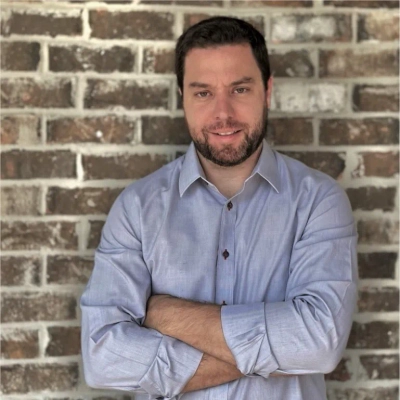
As far as “coping mechanisms” go, something that’s big for me is leaning on those around me when I need encouragement or motivation. I’ve found that facing setbacks all on my own is always a lot more difficult than when I have a support system lifting me up. From my team members to my family, I know that I have people I can be honest with who will help me see the bigger picture when I am struggling to. That’s why I think it’s so important for any person, regardless of what they do or what stage in their career they are at, to have a support system.

Learn from Every No Toward Your Yes
When one door closes, a better door opens. I’ve always been a believer that “everything happens for a reason,” and sometimes if a job opportunity doesn’t work out, it could ultimately be a blessing in disguise. You are where you’re supposed to be, and the right role will appear when it’s meant to be. As far as staying resilient, job seekers should “thrive on rejection” because the more “no’s” you receive, the closer you are to the “yes.” You can learn something from every experience, conversation, and interview, which are all stepping stones to lead to the right organization, role, promotion, and team.

Aim for Daily Improvement, Not Perfection
I’ve found that accepting balance is key. There will be setbacks and there will be successes. If I can focus on doing 1% more today, or being 1% better today, or getting 1% more accomplished today, then it all adds up to a lot eventually. Not having that survive-or-die mentality helps you ride it out for the long-term.

Faith Provides Identity Beyond Business Results
As the owner of three businesses in the Cleveland area, I have become very familiar with setbacks and rejection. I know what it feels like to have payroll coming up on Friday and not knowing where the money will come from to pay my employees. I know what it feels like when big leads choose a competitor after spending man-hours and money preparing quotes for them. For me, what allows me to be resilient with a positive attitude is without a doubt my personal faith in God. My identity is not based in my work performance — on good days or bad ones. I remind myself what God says about me in the Bible throughout the day and that His plans for me are good. Sometimes I need to audibly remind myself of these truths out loud. That and constant prayer. It’s powerful.
Remember Life Beyond Work Matters Too
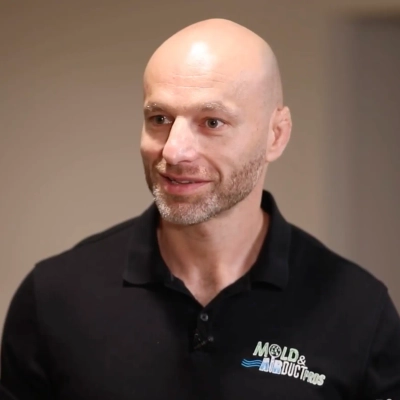
One way I personally deal with setbacks in my business and career as a CEO is knowing it’s not the end of the world. This is something that I marginally struggled with during my early days when my company would be at the back of my mind 24/7.
I’ve now realized that spending time with your friends and family is far more important. It doesn’t completely solve my setbacks, but it helps me remember there’s always a tomorrow and sometimes even helps me make better decisions unconsciously. This is called the Deliberation-Without-Attention Effect, or in other words, an “Unintentional Stroke of Brilliance.”
